Get Full Government Meeting Transcripts, Videos, & Alerts Forever!
Get email alerts on the Parks And Recreation topic
No spam. Unsubscribe anytime.
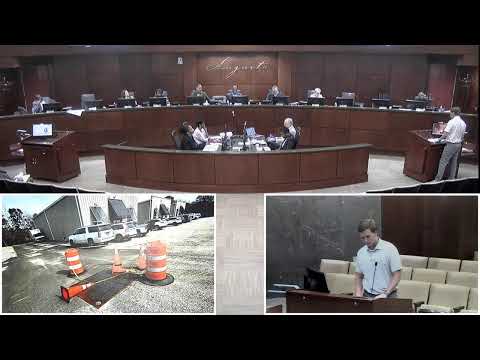
Augusta committee weighs parks‑usage audit, cameras and possible divestment
Summary
A contractor presented a parks usage audit driven by camera counts and a points matrix, prompting debate among commissioners over a proposed divestment threshold (30 vs 20) and a request for staff to return with cost‑savings estimates and a refined candidate list.
A consultant update on parks and recreation usage set off a substantive committee debate on whether the city should begin divesting underused park properties.
AB Ladson, who led the audit presentation, explained the methodology: parks were classified (mini, neighborhood, community, regional, special purpose), assigned condition points, size and proximity scores and — crucially — usage measured by a network of 137 cameras that take pictures every 15 minutes to estimate visitor counts. Ladson said the September analysis showed little change from July–August and flagged high‑use sites such as Augusta Commons and the Riverwalk marina; he also acknowledged camera malfunctions at several parks and gaps in counts for sites like Hickman and Eisenhower.
Commissioner Brandon Garrett and others pressed the commission to set a policy threshold for divestment. Garrett said parks scoring below 30 should be candidates for divestment unless projects were already planned or funded; several colleagues urged a lower threshold — 20 was proposed — or an asterisk to exclude parks with pending projects. Commissioner Johnson, among others, argued that recent investments (new playgrounds, upcoming projects) warranted exemptions. Commissioner Guilfoyle and other commissioners emphasized the study’s role in prioritizing investment to improve higher‑use parks and save maintenance costs on lower‑use sites.
The chair and members instructed staff to return to the next committee meeting with a cost‑savings analysis and a recommended list of candidate parks, and to flag any parks that should be exempted due to funded projects. The committee received the presentation and agreed — by motion and second — to schedule follow‑up with staff, including a request for more granular parameters for decision‑making.
What comes next: staff will provide a district‑by‑district list, cost‑savings estimates and clarifications on camera data gaps and projects slated for specific parks. Commissioners signaled they want a decision pathway rather than indefinite delay.