
Wells Select Board opens ordinance workshop on short‑term rentals, leaves details to future hearings
Get AI-powered insights, summaries, and transcripts
Sign Up Free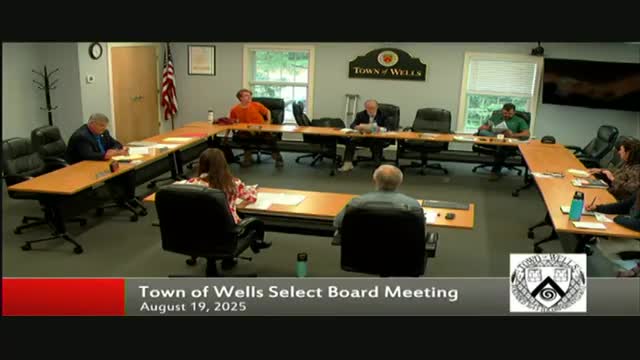
Summary
The Select Board held a workshop to draft a short‑term rental ordinance framework, focusing on whether to regulate from day one or set a minimum stay, how to pair zoning and licensing, enforcement mechanisms, caps and owner limits, inspections and exemptions for workforce housing.
WELLS, Maine — The Wells Select Board began a multi‑session effort to draft a short‑term rental ordinance, agreeing Monday to move forward with a skeletal framework while deferring many technical details to staff, the planning board and future public hearings.
At a workshop attended by select board members and planning‑board representatives, members framed STR regulation as two parallel tracks: land‑use controls (where rentals are allowed by zone) and a licensing regime that would require registration and life‑safety compliance. “We need both zoning and licensing,” the board chair said, urging a draft that clarifies caps by neighborhood, owner‑limits and registration requirements.
The board debated how to define a short‑term rental. Several members said the commonly used maximum of 30 days makes sense, and urged regulating from day one rather than creating a seven‑day minimum that could functionally ban weekend rentals and be difficult to enforce. Others flagged two‑month and 28‑day thresholds as possible cutoffs for distinguishing short‑ and long‑term housing. Concern about life‑safety — smoke and carbon monoxide alarms, egress and emergency contact requirements — was a principal driver behind members’ insistence that operators meet safety standards regardless of grandfathering claims.
Members discussed ownership limits and numerical caps as tools to deter institutional investors from buying large swathes of housing stock. Ideas included capping the number of licenses by zone, limiting the number of units a single owner may operate, or setting an overall town cap tied to housing inventory. Board members suggested first‑come, lottery or distance‑based allocation systems as options for distributing a limited number of licenses.
Enforcement options divided the board. Staff estimated a code inspector could complete four to six full inspections per day, making mandatory pre‑approval inspections expensive if the town took responsibility for inspecting all existing and new STRs. The board favored self‑certification with random reinspection and clear penalties — suspension, revocation and daily fines — while acknowledging that serious safety items should be brought into compliance immediately.
The board also raised ADU coordination, exemptions for seasonal workers and students, parking and occupancy limits, noise complaints, and whether RVs or mobile park models should be allowed as STRs. Members agreed the next step is for staff and the planning board to produce a draft ordinance and for the Select Board to hold follow‑up workshops and public hearings before any formal vote.
The Select Board left the meeting with a directive to produce a short, transparent draft and to bring specific cost and enforcement estimates back to a future session.
The process is expected to include joint meetings with the Planning Board and public hearings before any ordinance is adopted or placed on a ballot.