Get Full Government Meeting Transcripts, Videos, & Alerts Forever!
Get email alerts on the Adaptive Reuse Housing topic
No spam. Unsubscribe anytime.
Planning commission approves variance and land‑development plan to convert two downtown offices into 11 apartments
Summary
The Harrisburg Planning Commission approved a variance and land‑development plan allowing WCI Partners to convert 508 and 510 N. Second St. into 11 one‑bedroom units, citing unique physical constraints of the buildings and subject to council land‑development approval and historic‑preservation review.
The Harrisburg Planning Commission approved a variance and a tied land‑development plan on Aug. 6 to allow WCI Partners to convert two former office buildings at 508 and 510 North Second Street into 11 one‑bedroom apartments.
Planning bureau staff told the commission the buildings — constructed circa 1900 and 1920 — retain significant historic and architectural features and that the applicant seeks a variance from the density requirements in section 7‑307.3(a) of the zoning code. Staff recommended approval with conditions, including that exterior alterations require review by the historic preservation specialist and that the developer secure city council approval of the associated land‑development plan.
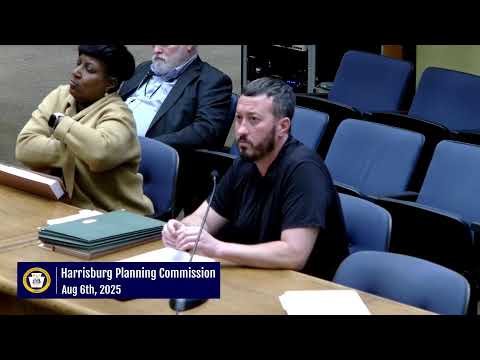
Dave Butcher of WCI Partners, the project applicant, said staff had covered the key points and that the team was happy to answer questions. He emphasized the site’s interior constraints, including switchback staircases, elevation differences between front and back floors, and thick masonry party walls that limit logical unit combinations.
Several commissioners said they supported reuse that would add housing and activate downtown but raised legal concerns about relying on financial hardship as a basis for variances. Commissioner McKenzie said she was uneasy about using financial arguments to justify zoning relief and asked staff to research relevant case law. Planning staff and the applicant responded that the primary justification being relied on is the buildings’ unique physical circumstances.
Commissioner O’Toole moved approval of the variance with the staff’s recommended conditions. The motion was seconded and carried by voice vote. The commission then approved the related land‑development plan with the condition that final plan filing be predicated on the granted zoning relief.
The projects proceed next to the city council for the land‑development step and to the historic preservation review where required.