
Columbus business owners report record optimism even as inflation bites
Get AI-powered insights, summaries, and transcripts
Subscribe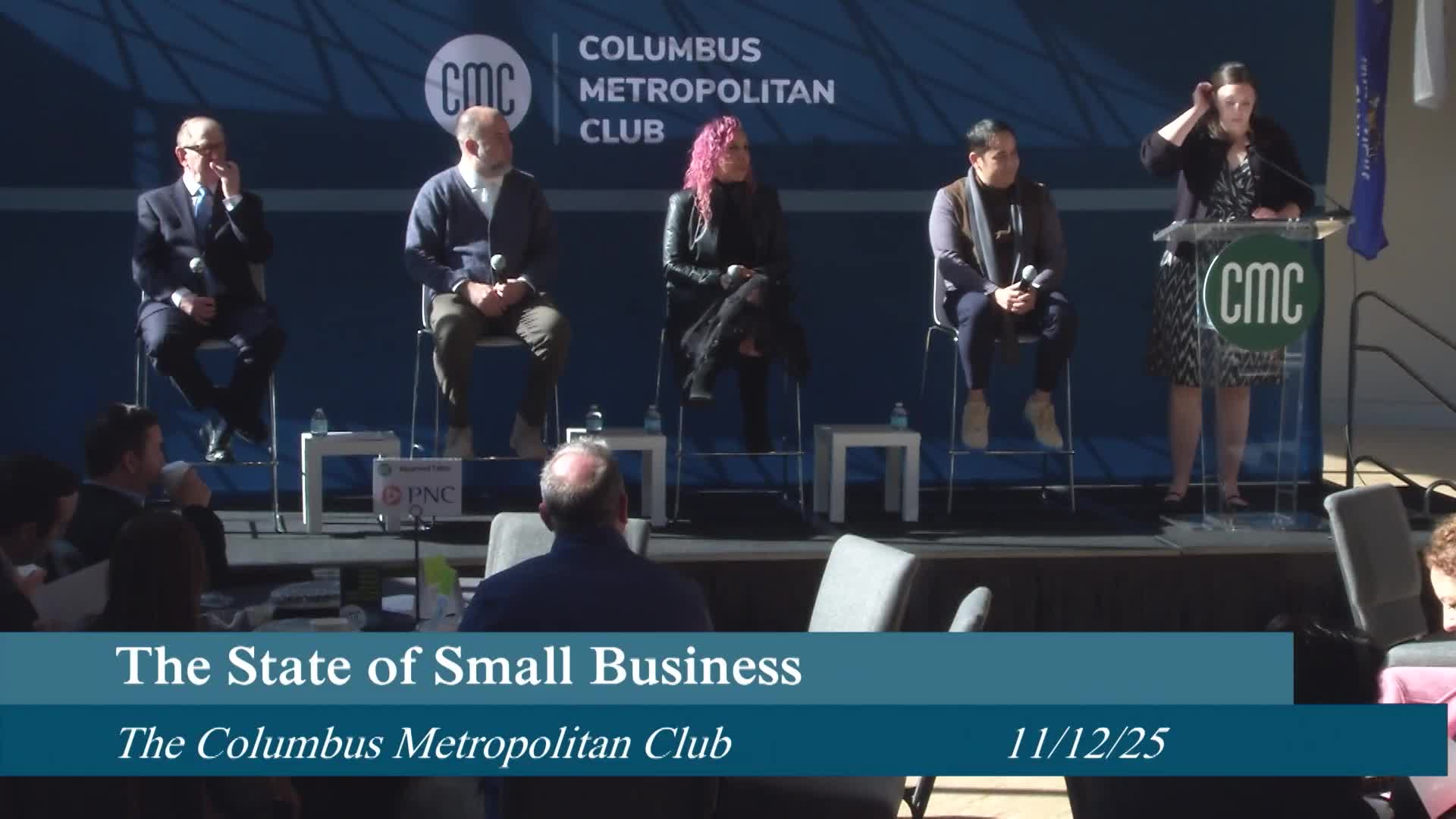
Summary
Panelists at a Columbus Metropolitan Club forum said local small-business optimism hit highs in a PNC survey, while leaders warned inflation, tariffs and health-care costs could force price increases; city and nonprofit programs, including microloans and a Small Biz Hub, aim to help.
Columbus — Small-business owners in Central Ohio are unusually optimistic about their prospects even as they face rising costs, panelists said at a Columbus Metropolitan Club forum on the city’s economic outlook.
PNC’s semiannual survey, cited by the forum’s host, showed 84% of respondents were optimistic about their own businesses, 67% were optimistic about the local economy and 58% were optimistic about the national economy. “They were highly optimistic — one of the highest we’ve seen,” said Stuart Hoffman, senior economic adviser at PNC, noting the survey was taken in July.
Why the optimism? Hoffman and other panelists pointed to strong job and labor-force growth in the region. “The greatest, fastest growth has been professional business services,” Hoffman said, adding manufacturing and construction jobs have also risen and the region has outpaced national trends in both jobs and labor force.
Still, the forum highlighted clear headwinds. Hoffman warned tariffs and other policy moves that raise input costs are being passed through to small businesses: “Small businesses probably struggle more to deal with tariffs than their larger sisters and brothers.” He also flagged potential near-term increases in health-care costs and said the consumer price index is likely to remain elevated into next year.
Panelists described how businesses are responding. Susan Post, digital editor at Columbus Business First and the session’s moderator, noted nearly 60% of survey respondents expect to raise prices in the next six months and 54% point to non-labor costs as the reason. Walter Iwas, founder of Tortilla Street Food, said he may raise menu prices to protect margins but hopes to avoid it. Ariana Ulloa, the city’s small-business coordinator, urged transparency with customers when prices change.
Local supports, panelists said, are central to keeping many small businesses afloat. Tim Kehoe, director of the Veterans Business Outreach Center at ECDI, described a $54 million loan portfolio at his organization with an average loan size near $20,000 and an active microloan program. “We actually do microloans as low as $500,” Kehoe said; ECDI’s average loan size was cited around $22,000 and Kehoe announced a temporary 2% small-loan special for loans up to $10,000.
Ulloa highlighted the city’s Small Biz Hub, an online portal that centralizes information on financing, grants, workspace, mentoring and other programs, and stressed the city’s role in coordinating providers such as ECDI, the SBDC and the Columbus Chamber.
On workforce, panelists said Columbus benefits from a growing labor force and demographic change, including rising immigrant entrepreneurship. Kehoe noted that immigrants and refugees start businesses at higher rates and that shifts in federal resettlement policy have complicated some support channels for new Americans.
The forum closed with a practical takeaway: monitor costs. “One of the biggest things they’re up against is their cost of goods sold,” Kehoe said. Hoffman recommended watching job numbers and regional data for signs of broader weakness.
The Columbus Metropolitan Club said the next PNC small-business survey will be released early next year and encouraged attendees to review the Small Biz Hub for local resources.