Get Full Government Meeting Transcripts, Videos, & Alerts Forever!
Get email alerts on the Transit topic
No spam. Unsubscribe anytime.
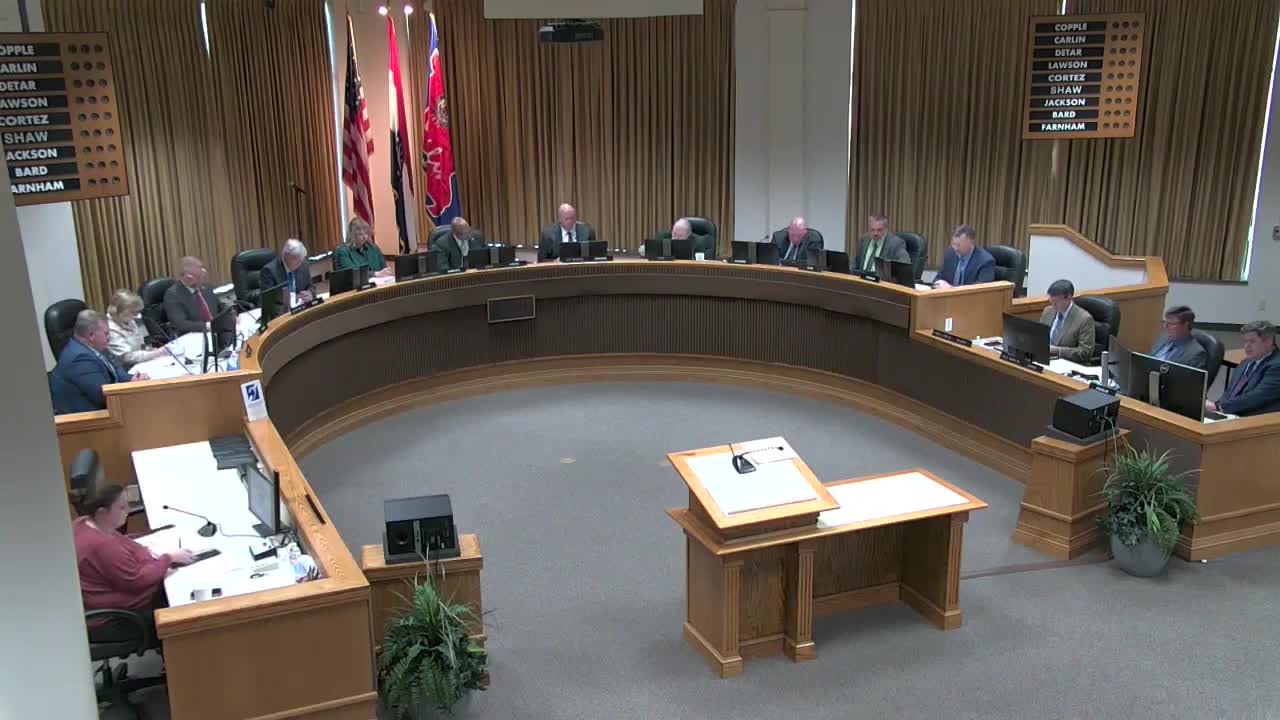
Council hears regional transit study recommending Transportation Development District and half‑cent sales tax
Summary
Consultants told the Joplin City Council a regional Transportation Development District (TDD) paired with a nonprofit operator and a half‑cent sales tax could expand service across Jasper County, add routes and frequency, and attract federal funds; council asked staff to engage employers and nearby municipalities before advancing formation steps.
David Johnson of TransPRO presented the Joplin Regional Transit Study, funded by a federal Areas of Persistent Poverty grant, recommending a governance combination of a Transportation Development District (TDD) and a nonprofit to operate regional transit. He said the analysis—based on two surveys and steering‑committee input—shows strong regional support and demonstrates operational and funding trade‑offs.
The presentation laid out governance options and revenue scenarios. Johnson said officials ‘‘scoured Missouri statutes’’ and concluded a TDD provides statutory flexibility; pairing it with a nonprofit, he said, would give operational stability and allow the nonprofit to be the federal grant recipient while the TDD serves as a conduit. He recommended a district boundary that could include the city of Joplin and Jasper County but noted the council can limit the TDD to a smaller contiguous set of jurisdictions.
Consultants offered revenue scenarios ranging from 1/8‑cent to 3/4‑cent increases in sales tax and recommended a half‑cent sales tax as ‘‘transformational’’ because it would expand coverage, increase frequency on key routes and add Saturday service. Johnson also proposed a 10% capital set‑aside so the fleet meets federally required state‑of‑good‑repair standards.
Council members pressed on details. Councilman Koppel and others questioned the revenue estimates and suggested staff contact existing county tax authorities and large employers to validate assumptions. The consultants said jurisdictional boundaries drive revenue certainty—state Department of Revenue data make estimates exact when a municipal or county boundary is used—and that vehicle and staffing needs will be calculated once the boundary and revenue level are chosen.
Mayor Cortez and council agreed the next step is more targeted outreach: speak with employers, convene municipal partners and finalize a recommended boundary and financing approach before the council is asked to authorize staff to form a nonprofit or advance a TDD. David Johnson said an implementation plan and an executable recommendation will be ready by year‑end if the council gives direction.
The council did not take a binding vote to form a TDD at the meeting; members instead directed staff to begin outreach to employers and affected municipalities and to return with additional analysis and an implementation timeline.