Titusville board asks staff to close 'wetland loophole,' votes to revise comp plan language
Loading...
Summary
The Titusville Environmental & Water Resources Board voted unanimously to ask staff to remove a qualifying phrase from comprehensive plan policy 1.16.0.2 and to require that adjacent wetlands be considered when a wetland touches a property boundary, after presentation showing delineations expanded conservation areas for PD South.
The Titusville Environmental & Water Resources Board on Wednesday voted to ask staff to rewrite portions of the city's comprehensive-plan wetland policy to prevent applicants from treating fragments of a larger wetland as separate, fillable parcels.
Board members focused on policy 1.16.0.2 and on a recent applicant filing for the PD South/PD South (Pee Dee South) area that consultants had mapped as a set of small, discrete wetlands. Presenters and members argued those pieces are contiguous and together exceed the 5-acre threshold that the city's conservation policy treats as automatically warranting conservation land use. A board presenter said formal delineation added roughly "10.818 additional" acres to conservation in the applicant's filing and urged closing what she called a drafting loophole in the policy.
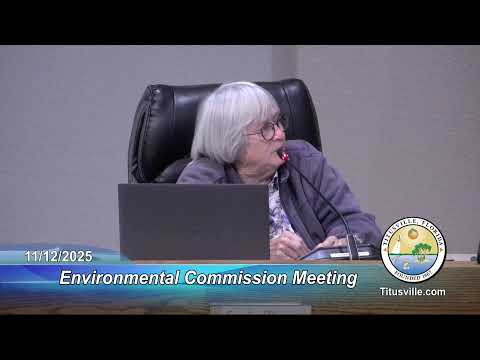
Chairman Majek framed the board's role and why the change matters: "We are the Titusville Environmental slash Water Resources Board" and "the wetlands are wetlands whether that's on that man's property or woman's property or somebody else's property," he said, arguing that delineation should follow the wetland rather than stop at arbitrary parcel lines. The board agreed with presenters that relying on conservation easements or PD zoning alone can leave protection vulnerable to later rezoning or amendment.
The board first voted to ask staff to remove the clause in policy 1.16.0.2 that read "unless such wetlands are preserved by a conservation easement as part of a plan development or other master plan development." The roll-call vote was recorded as unanimous. Board members then approved a companion text change clarifying that conservation land use should include wetland areas on site "along with any upland areas to be permitted for preservation for state and/or federal listed wildlife species," and they asked staff to consider where best to place that language in the plan.
Members also adopted a separate, related request that when a wetland touches a property boundary staff should evaluate adjacent parcels so that the contiguous wetland's acreage is counted against the 5-acre threshold. Members discussed practical limits on how far to delineate and agreed the standard should be applied using "best available and appropriate data," including GIS and field delineation as needed. That motion, too, passed unanimously.
The board directed staff to draft the specific ordinance or comp-plan amendments and return with language and placement recommendations; members indicated they expect follow-up review at a future meeting. No binding city ordinance was adopted at the session; the board's actions are advisory recommendations to staff and, ultimately, to city council.