
Regents committee recommends approval of $60M+ in capital projects at three universities
Get AI-powered insights, summaries, and transcripts
Subscribe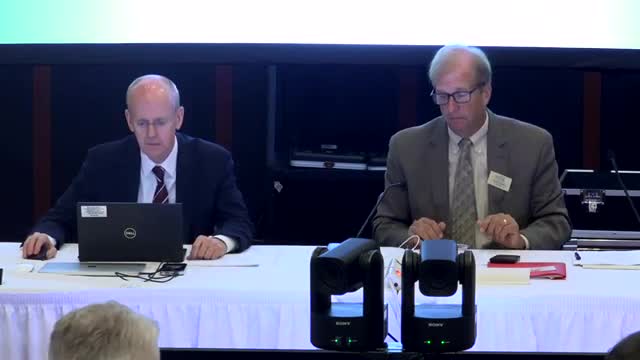
Summary
The Board of Regents’ Property & Facilities committee recommended approval by general consent of capital improvement plans at the University of Iowa, Iowa State and the University of Northern Iowa, including hospital OR modernizations, a new ISU dining support center and large residence‑hall restroom renovations at UI.
Regents’ committees recommended approval Wednesday of multiple capital improvement projects at the three state universities, including operating‑room modernizations and student‑housing overhauls that university presenters said address deferred maintenance and growing program needs.
Rod Leonard, presenting for the University of Iowa, asked the Property & Facilities Committee for permission to proceed on five projects. He described a first‑stage fit‑out at the UI Health Care North Liberty campus to add four operating suites (first‑stage cost roughly $6 million; full shelled‑space fit‑outs were preliminarily estimated at $19–25 million). He also described a downtown medical‑center renovation to modernize 14 operating rooms ($9.57 million, funded from UI Health Care earnings) and a Burge Hall restroom renovation for student housing ($20.3 million, phased over five summers) that will address roughly $22 million in deferred maintenance.
Sean Reeder presented two Iowa State projects, including permission to proceed with a new 27,000‑square‑foot dining support center to centralize bakery and catering operations and upgrade electrical utilities supporting adjacent residence halls (estimated $20–23 million; funded from ISU dining and building renewal funds). Reeder also requested planning funds for the State Gym natatorium renewal (estimated $20–22 million).
Michael Hager described two University of Northern Iowa projects: an overhaul of the campus’s largest dining center and upgrades at the recently acquired Trailside apartment complex (window replacement, siding, and added card access). Funding for those projects will come from residence system funds and standard design‑bid‑build delivery.
Committee chairs said members had questions about timing and deferred‑maintenance priorities but raised no objections. The committee recommended approval of the projects by general consent; final budgets and schematic designs will return to the board as required.
Why it matters: The projects collectively target clinical capacity, deferred maintenance and student life improvements that university officials said are necessary to meet enrollment and patient‑care demand. Many of the proposals are staged: permission to proceed or schematic design requests were advanced now so administrators can refine budgets and return to the board for final approval.
What’s next: Presidents and chief financial officers will bring final budgets and schematic designs to the full board for formal approval; project timelines cited in committee materials generally target construction starting in 2026 and completion through 2027 or later.