Dallas committee briefed on plan to move city elections from May to November
Loading...
Summary
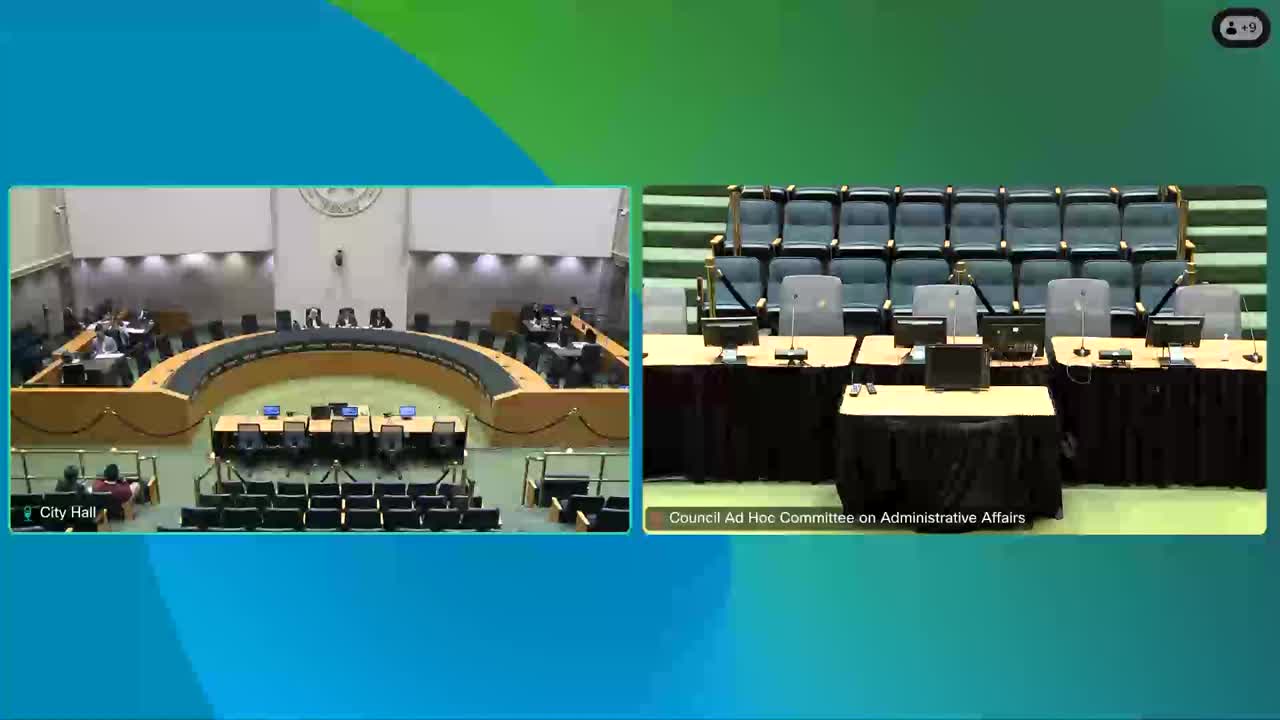
City Secretary Billy Ray Johnson told the Administrative Ad Hoc Committee on Administrative Affairs on Nov. 10 that Dallas can move municipal elections from May to the November uniform date if the City Council passes a resolution by Dec. 31, 2025, under Senate Bill 1494.
City Secretary Billy Ray Johnson told the Administrative Ad Hoc Committee on Administrative Affairs on Nov. 10 that Dallas can move its municipal general elections from May to the November uniform date in odd-numbered years if the City Council adopts a resolution by Dec. 31, 2025.
Johnson said voters approved Proposition D on Nov. 5, 2024, removing the charter requirement that general elections be held in May and giving council authority to set election dates by resolution. "Proposition D passed with strong voter support with 65% voting in favor," he said.
Why it matters: Senate Bill 1494, passed by the 2025 Texas Legislature and signed June 20, 2025, gives municipalities the option to move to the November date. Johnson told the committee the change would alter several operational dates and responsibilities: candidate filing would shift to mid-July through mid-August in a November cycle, general election day would move from a Saturday to a Tuesday, and runoffs would occur on a Saturday in December designated by the secretary of state. He said Dallas County would determine polling locations and election judges for November elections, reducing the city's direct control over those elements.
The briefing also addressed the practical effects on council terms and appointments. Johnson said the new council term would begin on the third Monday in December (for example, Dec. 20, 2027), which would create a holdover period during which current council members remain in office until sworn in. City Attorney Bert Vandenberg told the committee the change would not require an adjustment to the charter's term-limit language; the change instead adds a short holdover interval without altering the number of full terms a member can serve.
Committee members and staff discussed turnout and costs. Johnson and election manager Briley Franklin reviewed historical turnout figures and said turnout varies by ballot content; they cited city turnout examples and a Mesquite case in which turnout rose after that city shifted to November. Council member West told the committee the move aims to increase participation and save money, saying it would save "approximately $432,000 per election cycle." Jake Anderson, interim director of government affairs, described SB 1494 as applying to municipalities and noted the bill sets a limited window for when cities must adopt a resolution.
Officials cautioned that savings depend on runoff scenarios. Staff said a December mayoral runoff could cost up to $1 million, potentially eroding anticipated savings; staff also said the county typically assumes about 65% of November election costs, explaining the expected savings versus a standalone May city election.
Next steps: Johnson said he had placed a resolution on the City Council agenda for Wednesday, Nov. 12, 2025, that would require a simple majority to adopt the change; he said his office would immediately coordinate with the Dallas County Elections Department if the council approves the resolution. The committee did not vote on the policy at the meeting.
The committee also previewed a consent agenda item asking council to pay Dallas County an additional $109,366.44 for the May election final invoice; staff said a June runoff refund of $59,296.09 would reduce the net variance.
What's next: The resolution and the county invoice are scheduled for the Nov. 12 council agenda. Staff said it will provide exact implementation dates and additional details if council adopts the resolution.