
Goose Creek CISD reports enrollment trends, multilingual gains and special-education caseload growth
Get AI-powered insights, summaries, and transcripts
Subscribe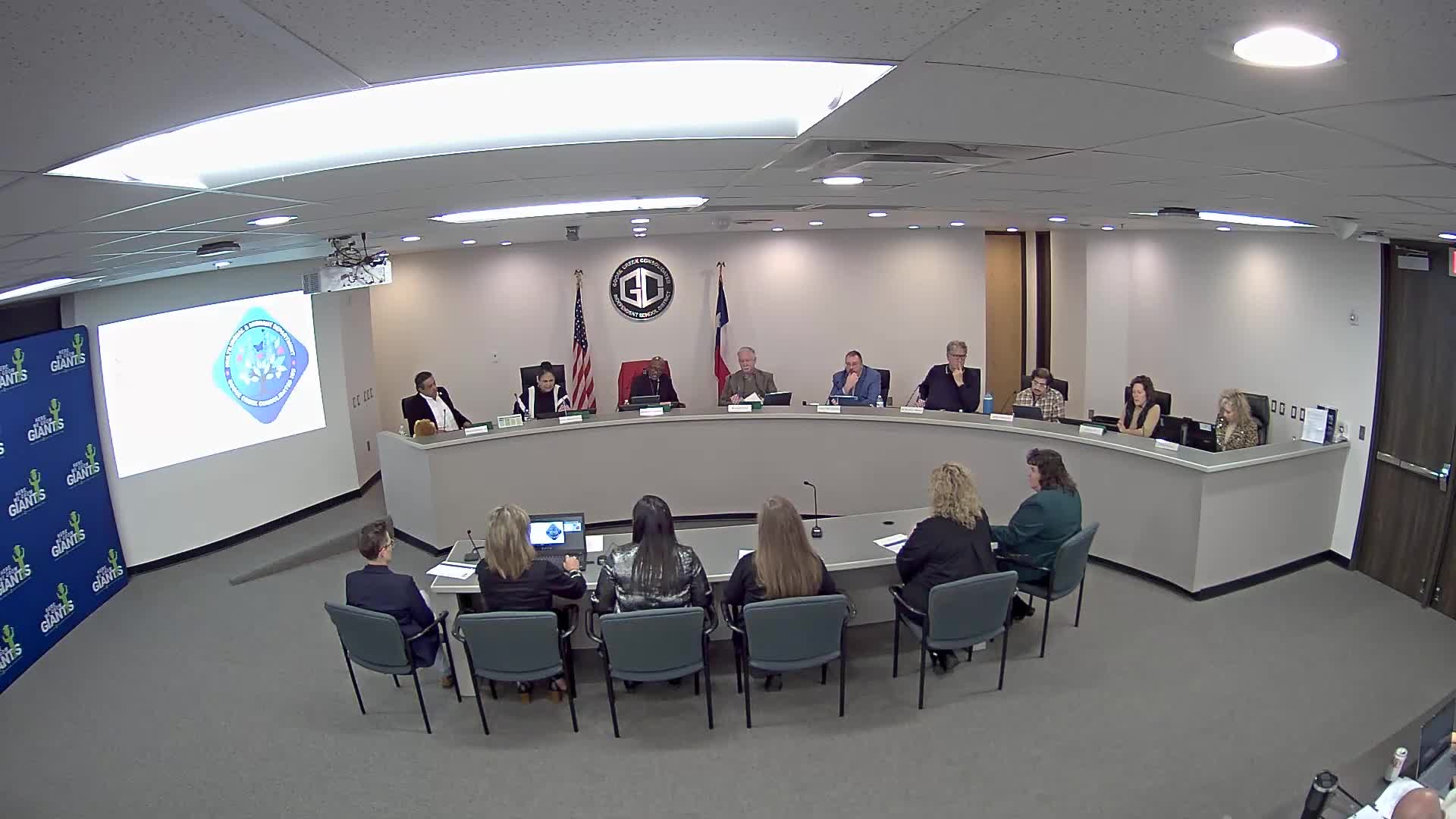
Summary
District leaders told trustees the system now serves more than 43 home languages, reported reclassification gains for emergent bilingual students, and provided special-education data: 24,022 students districtwide with 4,475 served in special education (18.62%), a 71% inclusion rate and a Results Driven Accountability determination level of 2.
District curriculum and special programs staff presented detailed updates on multilingual, migrant and special-education services at the Nov. 10 board meeting.
Sam Torres Banda, director of the Multilingual and Migrant Department, said the district now documents more than 43 home languages and noted steady reclassification of emergent bilingual students (more than 300 students reclassified over two years). Torres Banda highlighted family engagement initiatives such as the Dual Language Parent Academy and the first-ever TELPAS family night, and said adult-education outreach elicited roughly 500 expressions of interest for GED, citizenship and ESL classes.
Senior Director Holly Farris and special-education staff reported that the district serves 24,022 students, 4,475 of whom are enrolled in special education (18.62% of enrollment). They described changes in service delivery—dyslexia services moving under special education, additional SILK and FOCUS classrooms for students with autism, and a 71% inclusion rate of special-education students in regular classrooms. Farris said the districts special-education RDA (Results Driven Accountability) determination level is 2; staff described steps for corrective planning, quarterly TEA interaction and partnerships with Region 4 to support campuses identified for targeted improvement.
Trustees asked how the determination level changed year to year and whether a level 2 would trigger state audit requirements; staff said a 3 or 4 would be more likely to prompt an audit, whereas a 2 results in local corrective actions and monitoring. Board members also pressed for disaggregated counts of students missing from rolls (L98 codes) and for more regular tracking of low-performing campuses.
Next steps: Special programs and assessment staff will provide longitudinal RDA materials and campus-assessment updates to the board for monitoring.