Get Full Government Meeting Transcripts, Videos, & Alerts Forever!
Get email alerts on the Legislative Transparency topic
No spam. Unsubscribe anytime.
Inside the Minnesota Senate’s journaling office: how votes and amendments are recorded
Summary
Staff from the Minnesota Senate journaling office described how the two-person team compiles daily and session journals, checks grammar and vote records, works late hours during session and why those journals matter for public transparency.
The Minnesota Senate’s official journaling office compiles the daily and session journals that record votes, amendments and other formal actions, staff said in a recorded conversation about their work. Matt Hanson, one half of the two-person team that runs the office, said the job requires "flexibility and adaptability" and called it rewarding.
The office produces a journal every day the Senate is in session and a compiled set after the session ends. "We wait word for word, every comma, every period," a journaling office staff member said, describing the careful line-by-line review that goes into preparing the published journals. Staff said the office recorded a high output during the last session — 19 volumes and what they described as "over 20,000 of pages that we read."
Linda Jackson, director of journal production, described building the daily journal "as session occurs as it's happening." Jackson said staff often stay 1½ to 2 hours after adjournment to ready the journals for publication and that on late nights they can be the last office working, sometimes around 3 a.m.
Staff stressed that the journal is a record of actions rather than a verbatim transcript. "We show every vote record, every amendment that was introduced, roll calls, confirmation reports, letters that we get from the governor — all of that gets recorded in the journal," the staff member said. That record, the speakers said, is available to the public and can be used by voters and researchers to trace how a bill moved through committees and how individual senators voted.
The office’s small size — the staff described it as two people responsible for daily production — frames much of the work. "We're the only 2 people in the office," one staff member said, adding that the responsibility for completing journals rests with them.
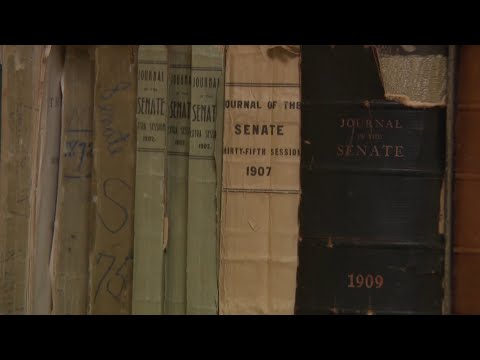
Staff framed the journals as both a production of government procedure and a historical archive. They noted a long institutional history dating to the late 1800s and described pride in preserving an authoritative public record.
No formal motions, votes, or policy decisions were recorded in the conversation; the discussion focused on the office’s procedures and role in legislative transparency. The account provides a behind-the-scenes look at how Minnesota’s Senate journals are compiled, checked and made available for public review.