Yuma Union HSD to recommend funding concurrent college courses for eligible seniors
Loading...
Summary
District staff proposed a program to pay Arizona Western College tuition up to the state full‑time threshold for Yuma Union High School District students who are credit‑current and on track to graduate; district would also cover a $30 per‑credit technology fee and present a recommendation to the board in December.
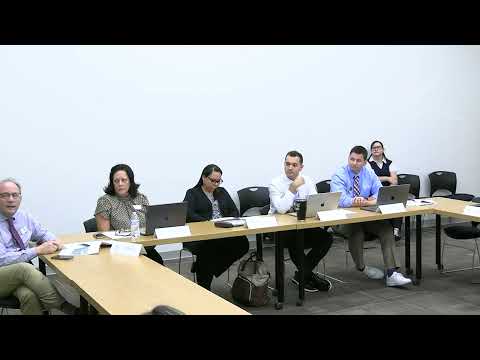
Yuma Union High School District (4507) staff outlined a proposal to fund concurrent college courses for district students who are enrolled in the district and "on track to graduate," a move intended to help seniors reduce on‑campus schedules while recapturing state funding the district otherwise loses when families pay for college credits privately.
Speaker 3, a district administrator leading the presentation, said the program would fund a student's concurrent tuition "up until they reach what the state calls 1 full time," and that "courses exceeding that will be the student's expense." The district would verify eligibility through counselor review and academic assistant‑principal approval.
The proposal concentrates on juniors and seniors who can adopt a reduced high‑school schedule once credit‑current. Speaker 1, a district staff member, described the financial logic: "We're actually spending more money on that student than we would on another student," and by covering college credits in‑district the district can capture funding rather than lose it when families pay outside providers.
District staff said partnership logistics are already in motion with Arizona Western College (AWC). The district expects AWC to accept a sponsor‑billing form submitted in March so students receive preferred registration when AWC opens courses in April. Staff said AWC has committed to a favorable per‑credit price and that the district would also cover a technology fee of roughly $30 per credit; an official recommendation will go to the board in December.
Staff stressed program safeguards: counselors will verify that the college course satisfies the student's graduation requirements; the academic assistant principal will provide a second level of review; and the district will require at least one course to be taken at the student's home campus to meet a statutory "brick and mortar" requirement mentioned in the discussion (the specific statute was not named in the transcript). The district plans to maintain its existing practice of weighting qualifying concurrent courses on the 5.0 scale, so GPA calculations and top‑10 ranking policies would remain unchanged.
Implementation details remain under development. Staff said they are drafting a policy and related procedures for board review and have scheduled attorney review of possible withdrawal or failure consequences; they described developing a campus liaison role to check in with concurrent students, coordinate with AWC, monitor grades, and help students navigate college coursework. Staff also said AWC can accept sponsor billing for late‑arriving students where space permits, but availability is not guaranteed.
No formal motion or vote occurred during this discussion; staff said they will return with a formal recommendation for board action in December. The meeting concluded with appreciation for the partnership work and recognition that operational details will be refined as the district implements the program.