Get Full Government Meeting Transcripts, Videos, & Alerts Forever!
Get email alerts on the School Traffic topic
No spam. Unsubscribe anytime.
Traffic study says Franklin Elementary expansion will add about 100 morning vehicle trips; signals not yet warranted
Summary
A traffic impact analysis tied to a school referendum finds Franklin Elementary's planned increase to about 600 students would add roughly 100 morning vehicle trips and modest afternoon increases; engineers do not recommend new traffic signals but propose signage and driveway changes timed with phased construction (summer 2026, occupancy 2027).
Oshkosh City’s Transportation Advisory Committee on Tuesday heard a traffic impact analysis for a school district referendum that would expand Franklin Elementary and convert Perry Tipler Middle School to partial 4K and recreation functions. Presenters said the Franklin site would grow to about 600 students from roughly 350–400 today and that construction could begin as early as summer 2026 with the additional students attending in September 2027.
Nate Constein of the project team summarized site changes including a new playground, revised drive aisles on the northeast side of Franklin and a west-side bus and staff loop intended to move most parent drop-off activity off Mason Street. "The intention is that buses and staff are staying on the west side of the site and parents are using that drive-through lane," Constein said.
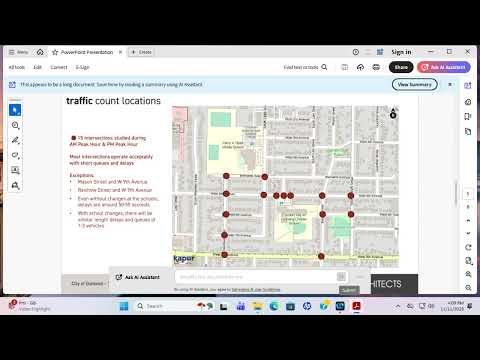
Neil Steika of Kapur Associates, who led the traffic impact analysis, said engineers studied 15 intersections during AM and PM peak hours and found most currently operate acceptably. He identified Mason Street at West 9th as an exception, where queues now approach 30–65 feet and delays run about 50–55 seconds. Steika said the study estimates about "100 new trips into the school site in the morning" and about 85 arrivals in the AM and around 115 vehicles leaving in the PM for Franklin.
The consulting team evaluated alternatives including traffic signals and lane reconfigurations. "At this point, it's not warranted to go to a traffic signal," Steika said; other changes such as stop sign adjustments did not produce overall improvements in delay. The consultants recommended converting a nearby T-intersection into a two-way stop for safety and using yield control at some East–West approaches to create continuity along the corridor.
School district staff and committee members discussed where the additional students would come from; presenters said the bulk are expected to shift from the Roosevelt site. Committee members asked about phasing; presenters responded that the new drive lane could be built in 2026 while full student increases would not occur until the 2027 school year, giving the city time to implement signage or stop controls ahead of occupancy.
The committee did not take a final recommendation at the meeting; staff suggested presenting the TIA and returning a recommendation at the next committee meeting so nearby residents can be notified and design details can be developed before ordinance or signage changes take effect.