Supervisors weigh zoning, regional water options to protect groundwater against industrial wells
Loading...
Summary
A discussion of industrial-scale groundwater protection focused on whether to pursue prohibitions or zoning tools, require municipal hookup in the industrial corridor, refer draft ordinance to planning staff, and explore regional redundancy options; supervisors recommended legal review and planning referral.
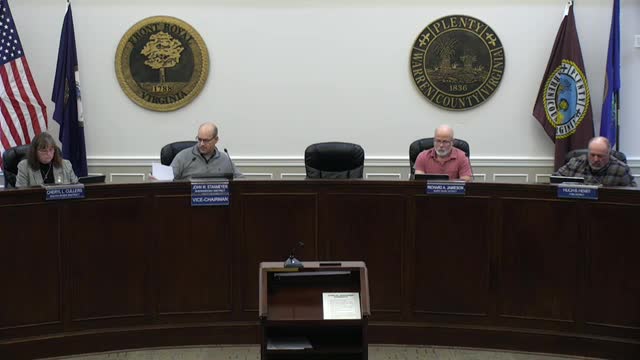
Warren County supervisors spent substantial time on Nov. 12 discussing how to protect local groundwater from high-volume industrial wells tied to rezonings in the county’s industrial corridor.
Supervisor Rich Jamieson (speaker 13) led off, saying rezonings in the industrial corridor have raised constituent concerns and asking whether the board wanted to advance regulatory protections. Jamieson and other supervisors noted the county’s comprehensive plan identifies the corridor but said groundwater availability in parts of that corridor is limited.
Speakers debated tools: Supervisor Henry (speaker 1) suggested using zoning and conditional-use permits to require industrial properties to connect to municipal water rather than permit private industrial wells, or to restrict high-volume wells by land-use condition. Several supervisors recommended referring the idea to planning staff for a legal and technical review rather than attempting an ordinance immediately at the board level.
Board members also discussed regional alternatives and redundancy (e.g., interconnections with neighboring water systems such as Frederick County or the Frederick Water Authority) and acknowledged past cost estimates to build interconnections that range from multi-million-dollar estimates. One supervisor noted that a county presentation indicated limited groundwater in the corridor and advised prospective industrial users to consult county hydrology staff.
Several supervisors said they support protecting water resources while also wanting to see the industrial corridor developed; the consensus at the work session was to ask planning staff for further work, legal review and options that could protect groundwater without unduly penalizing small businesses. No ordinance was adopted and no vote was taken during the session.