Planning commission recommends adding truck‑route map to Jurupa Valley general plan to meet state law
Loading...
Summary
The Planning Commission voted to recommend a General Plan amendment to add a truck‑route map and adopt a CEQA addendum to meet Assembly Bill 98 and Senate Bill 415 requirements. Staff and consultants said the map is narrowly scoped to meet a Jan. 1, 2026 deadline and will be followed by broader mobility updates and public outreach next year.
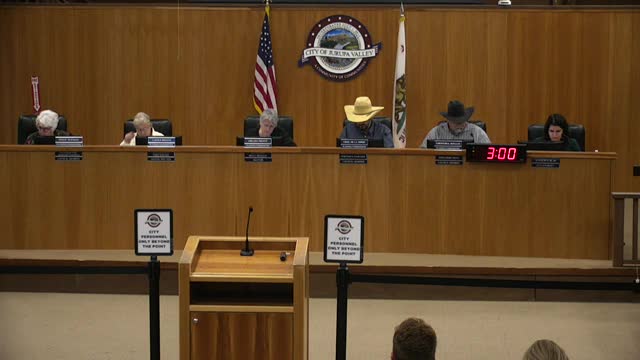
The Jurupa Valley Planning Commission recommended adding a designated truck‑route map to the city’s Mobility Element and adopting an addendum to the General Plan Environmental Impact Report to comply with state law. The motion passed unanimously after staff described the statutory deadline and consultants outlined the recommended routes.
Jean Ward, the city’s project manager for the effort, told the commission the city hired Farron Pierce to conduct a freight analysis and mobility‑element update because Assembly Bill 98 and Senate Bill 415 require jurisdictions in warehouse‑concentration regions to incorporate truck‑route maps into their general plans by Jan. 1, 2026. “The intent of AB 98 and SB 415 are to regulate truck traffic by designating safe and efficient truck routes that minimize the impacts of trucks on sensitive areas,” Ward said during the staff presentation.
Jolene Hayes, principal at Farron Pierce, presented the consultant team’s approach and recommended map. The consultant identified routes that provide direct access to existing industrial and logistics facilities (the threshold cited in state guidance is facilities with roughly 250,000 square feet of warehouse), reviewed existing ordinance‑based restrictions, and collected sample truck counts (she described the counts shown as representing about 10% of local traffic). Hayes said the map shows the heaviest truck volumes in the Mira Loma and Agua Mansa industrial clusters and that staff recommend keeping ordinance‑based prohibitions where they already exist while narrowing some routes to the minimum necessary to serve facilities.
Deputy Director of Public Works Steve Larizo confirmed the city already has some weight‑limit signage in place on Etiwanda and Country Village from a 2019 ordinance and explained that additional signage for corridors identified as truck routes would be posted after council adopts the ordinance. Larizo also said the city plans to coordinate sign plans with neighboring jurisdictions and county resolutions to make enforcement practical.
Commissioners pressed staff on enforcement and tonnage thresholds. Staff said the draft map proposes updating some weight limits – for example, to recognize that many delivery vans now weigh closer to 7 tons, up from the older 5‑ton threshold – to avoid blocking electric delivery vehicles. The commission also asked staff to continue interjurisdictional coordination, since enforcement is more effective when adjacent cities adopt compatible designations.
The commission closed the public hearing after staff confirmed emailed comments had been placed in the record and moved to recommend adoption of the resolution and CEQA addendum. The item will now go to City Council for final action. Staff said the city will carry out a broader public engagement process and a full mobility element update next year.
What’s next: the council will consider the resolution and ordinance implementing truck‑route signage; staff plans additional outreach and a more extensive mobility‑element update in 2026.