Keystone-led wildfire and watershed initiative seeks sustainable public and private funding; committee probes liability and private‑sector outreach
Loading...
Summary
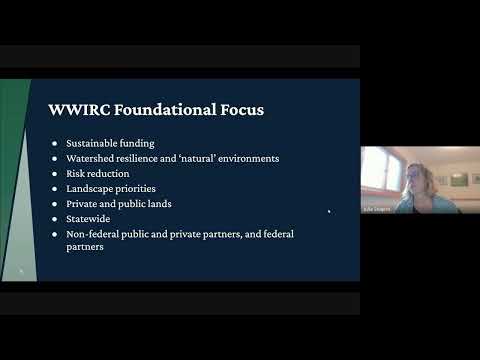
Julie Shapiro, natural resources center director at Keystone Policy Center, told the Forest Health legislative committee that a new cross‑sector effort called Work is focused on securing sustainable public, local and private funding to accelerate wildfire risk reduction and watershed resilience across Colorado.
Julie Shapiro, natural resources center director at Keystone Policy Center, told the Forest Health legislative committee that a new cross‑sector effort called Work is focused on securing sustainable public, local and private funding to accelerate wildfire risk reduction and watershed resilience across Colorado.
Shapiro said Work’s mission is to “advance sustainable public and private funding and other strategies to enhance the pace and scale of wildfire risk reduction and watershed resilience.” She described the effort as a convening forum that complements but does not replace operational agencies: “We are there to support really productive, action‑oriented conversations,” she said.
The initiative, Shapiro said, grew out of about a year of conversations among water utilities, federal and state agencies and nonprofits and picked up momentum after a December 2024 Denver Water luncheon that broadened private‑sector interest. Work’s initial strategy areas are statewide public funding (including exploration of non‑TABOR approaches), local public funding tools (ballot measures and underused authorities such as forest improvement districts), pooled private‑public financing and building a forest‑restoration economy (workforce, markets and innovation).
Shapiro listed supporting strategies that must accompany new funding: streamlining permitting processes including NEPA timelines, clarifying prescribed‑burn liability and coverage, adopting modern metrics that capture risk‑reduction and return on investment rather than acres alone, and improved strategic communications to recruit nontraditional partners.
Committee members focused questions on evidence, legal risk and outreach. Commissioner Jody Shattuck McNally cited a FEMA figure that a dollar spent on mitigation yields six dollars in reduced damages and cleanup, and asked about a US Chamber of Commerce study that suggested mitigation could produce up to a $13 return when broader economic disruptions are counted. Shapiro said she would check the $13 number and agreed that the initiative’s case to private partners rests on avoiding wide economic disruptions to tourism, workforce and local government operations.
The committee also pressed on prescribed‑fire liability. Allison Larch, a member of the prescribed fire subcommittee, said the group is “digging into essentially the liability of nonagency folks” and working to clarify how burn bosses, partner nonprofits and funders can obtain coverage and legal certainty to participate. The need for legal guidance and potential liability reform reflected a recurring theme in Work’s scoping interviews.
On private‑sector outreach, Shapiro said Work counts roughly 40–50 affiliated organizations but that only about four water utilities are currently engaged. The initiative is actively recruiting more utilities, energy companies (Xcel Energy was cited), chambers, hospitals, the recreation industry and other businesses, and intends targeted roundtables and leadership convenings so potential partners see concrete financial and reputational incentives to join.
Shapiro described next steps: a large meeting the following Monday to refine outreach strategies and priorities, continued workgroup and action‑team activity, and an open invitation for the legislative committee to share policy ideas Work could help to develop or amplify before the upcoming legislative session. The State Forest Service is scheduled to present to the committee on September 5 and the Department of Natural Resources on September 19.
The committee adjourned by unanimous consent after a motion to adjourn was made and seconded.
What’s next: Work will convene a broad Monday meeting to set engagement and outreach priorities; the committee will share policy ideas it wants Work to consider ahead of the legislative session.