Get Full Government Meeting Transcripts, Videos, & Alerts Forever!
Get email alerts on the Opioid Remediation Grants topic
No spam. Unsubscribe anytime.
Commissioners score two opioid remediation grant proposals; concerns focus on staffing and funding sustainability
Summary
At its Oct. 15 meeting, the Fairbanks North Star Borough Health and Social Services Commission heard proposals from Interior AIDS Association and Northern Hope Center for opioid remediation funds. Commissioners praised program goals but flagged sustainability and reliance on pending grants; individual scores were submitted for staff to tabulate.
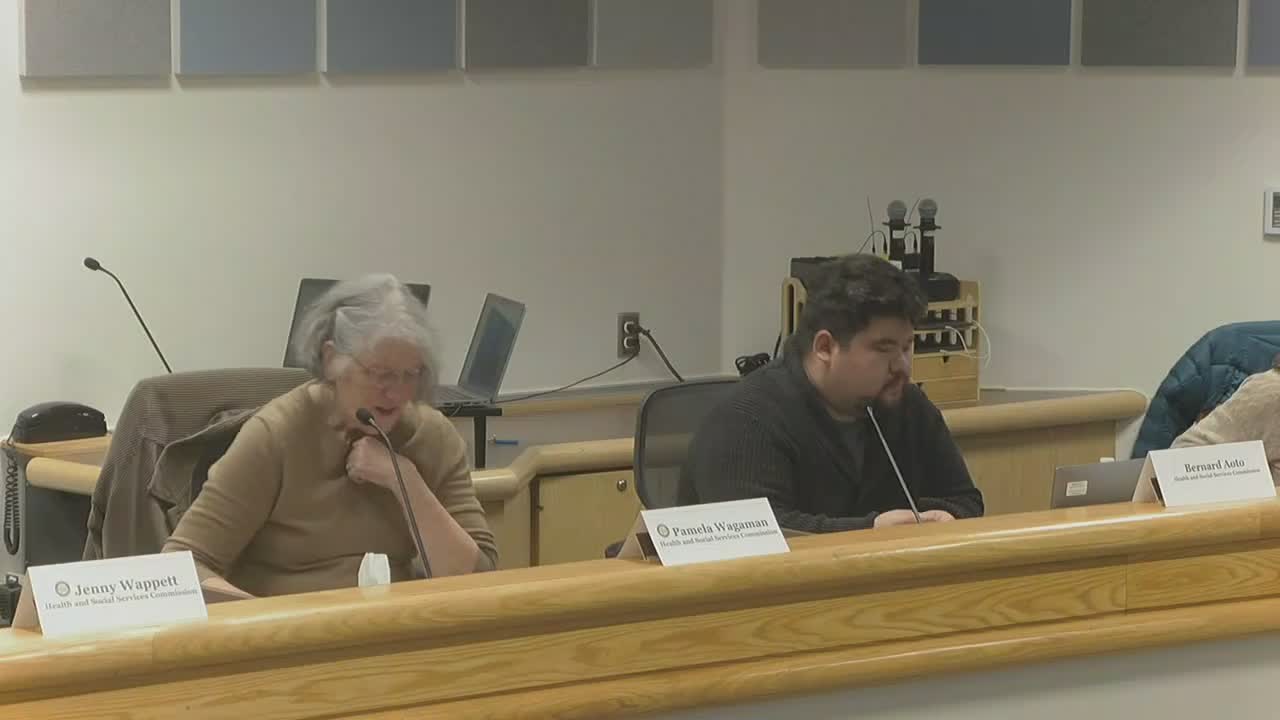
The Fairbanks North Star Borough Health and Social Services Commission on Oct. 15 heard presentations from two nonprofits seeking opioid remediation funds and recorded individual scores for each proposal, with commissioners citing sustainability and workforce concerns as central to their evaluations.
Anna Nelson, representing the Interior AIDS Association, presented a medication‑assisted treatment proposal focused on opioid use disorder. Nelson cited recent overdose statistics to underscore the need: "From March 2024 to March 2025, the CDC tells us there were 75,000 people who died from opioid overdoses in the United States," and she said that "in Alaska, the number was 245." Nelson told commissioners much of the program’s revenue comes from Medicaid, Medicare and insurance and warned proposed federal changes to Medicaid could sharply reduce funding for clients in the Medicaid expansion group.
Karen Blackburn, executive director of Northern Hope Center, proposed a peer‑based crisis stabilization program to operate at a secure site at 513 12th Avenue. "Our traffic has surged significantly, averaging roughly 60 to 80 encounters a day," Blackburn said, and described targets for phase 1: stabilizing about 120 individuals on site by June 30, diverting at least 90 people from emergency departments or jail, and achieving a 60% referral completion rate within seven days. Blackburn said the organization has hired 10 additional staff who are currently in training and that $25,000 listed in the budget would support one crisis specialist position.
During questioning, commissioners repeatedly raised two themes: long‑term sustainability and dependence on pending external funding. Several commissioners noted that both proposals rely on grants and insurance reimbursement for personnel costs and flagged uncertainty if private or federal funds did not materialize. One commissioner asked about a $250,000 request to the Rasmussen Foundation; Blackburn said that application is under review with an expected decision in November and that other corporate requests are also outstanding.
Commissioners approved, by unanimous consent, that both projects qualify under the opioid remediation uses listed in the RFP and then proceeded to provide numerical scores in three categories (project narrative, budget/cost effectiveness, priority needs). For the Interior AIDS Association, individual totals reported by commissioners ranged from 43 to 50 points; for Northern Hope Center totals varied approximately 31 to 42 points. The chair asked commissioners to submit final score sheets to staff for official tabulation.
The scores recorded at the meeting will be compiled by staff; the commission did not announce final rankings or funding decisions at the meeting. Staff indicated both organizations had submitted required reports and documentation.