Lifetime Citizen Portal Access — AI Briefings, Alerts & Unlimited Follows
UN highlights climate‑health links at COP30; launches refugee carbon fund and food‑waste initiative
Loading...
Summary
At COP30 the UN highlighted links between human health and climate risk, announced an extreme‑heat governance toolkit and described two UN initiatives: a refugee‑driven carbon finance fund launching projects in Uganda and Rwanda, and a UNEP‑backed program to halve food waste supported by a $3 million GEF project.
The United Nations on Wednesday emphasized the link between human health and planetary health at COP30 in Belém, Brazil, and highlighted several new initiatives aimed at adaptation and emissions reduction.
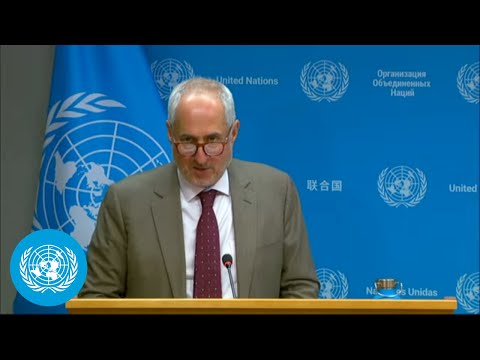
Spokesperson Stephanie said that in a large city like Belém, "we are reminded of the deep connection between human health and the health of our planet." She noted that Simon Stiell and partners launched a Belém health action plan intended to integrate adaptation, equity and climate justice.
The UN also announced an "extreme heat risk governance framework and toolkit" developed by the World Meteorological Organization (WMO), the UN Office for Disaster Risk Reduction, the Global Heat Health Information Network and Duke University, which the spokesperson said responds to the Secretary‑General's call on extreme heat. Stephanie cited WMO figures: "Extreme heat claims more than half a million lives every year and has resulted in a record 639,000,000,000 potential work hours lost in 2024."
On refugee and climate finance, the UN Refugee Agency (UNHCR) launched a Refugee Environmental Protection Fund described by the spokesperson as "the world's first large‑scale refugee‑driven carbon finance initiative." The fund's initial projects will launch in Uganda and Rwanda and the agency outlined a 10‑year aim to restore more than 100,000 hectares and expand clean energy access to 1,000,000 people.
Separately, the UN Environment Programme (UNEP) and partners launched an initiative to halve global food waste by 2030. UNEP announced a four‑year, $3,000,000 project, funded by the Global Environment Facility, to support implementation of food‑waste reduction targets; the spokesperson noted food waste contributes up to 10% of global greenhouse‑gas emissions and up to 14% of methane emissions.
The spokesperson framed these measures as part of adaptation efforts and as means to protect vulnerable populations from escalating climate risks.