UN says aid into Gaza constrained as crossings, equipment and safety guarantees remain blocked
Loading...
Summary
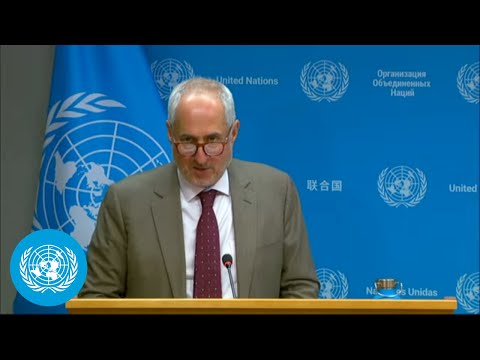
UN spokesperson Stephanie said aid offloaded at the Zikim crossing has not yet been driven into Gaza, citing slow procedures, blocked equipment (including medical‑waste machinery) and the need for additional crossing openings and safety guarantees for humanitarian convoys.
United Nations spokesperson Stephanie said Wednesday that although aid has been offloaded at the Zikim crossing, UN teams have not been able to pick up and drive supplies into Gaza because roads, procedures and permissions remain unresolved.
"A number of trucks have been offloaded," Stephanie said. "But it has yet to be ... picked up and driven into Gaza." She added that "things are moving, but not moving fast enough," and that additional crossings must be opened and safety guarantees provided for convoys to scale the response.
Journalists pressed for specifics about equipment reportedly blocked from entering Gaza. Stephanie said machines needed to contain and properly dispose of medical waste remain prevented from entering and that those restrictions increase public‑health risks. "Not having such equipment inside Gaza, as you can imagine, increases public‑health risks and contributes to an already dire sanitary and hygiene situation," she said.
The spokesperson described the logistics process: supplies are offloaded from Israeli trucks at the crossing and then reloaded onto Palestinian trucks, a two‑step operation that has slowed deliveries. When asked whether any UN or partner trucks are currently waiting at the Israeli side, she reiterated that the aid registered through the "27 20 mechanism" has been offloaded at Zikim but has not been collected for transfer into Gaza.
Stephanie urged implementation of Security Council directions and called on Israeli authorities and the guarantors to facilitate access. On a related point she said the UN is not part of an independent ceasefire monitoring mechanism and that monitoring responsibility rests with the guarantors.
The spokesperson also called for the opening of Rafah as an additional route, saying: "We would like Rafah opened, as well." She said UN teams and partners continue assessments to prioritize food, water, shelter, hygiene supplies and health care where people are living or have moved since the latest ceasefire.
The briefing closed with a note that Philippe Lazzarini, commissioner‑general of UNRWA, would brief in the same room at 1:30 p.m.