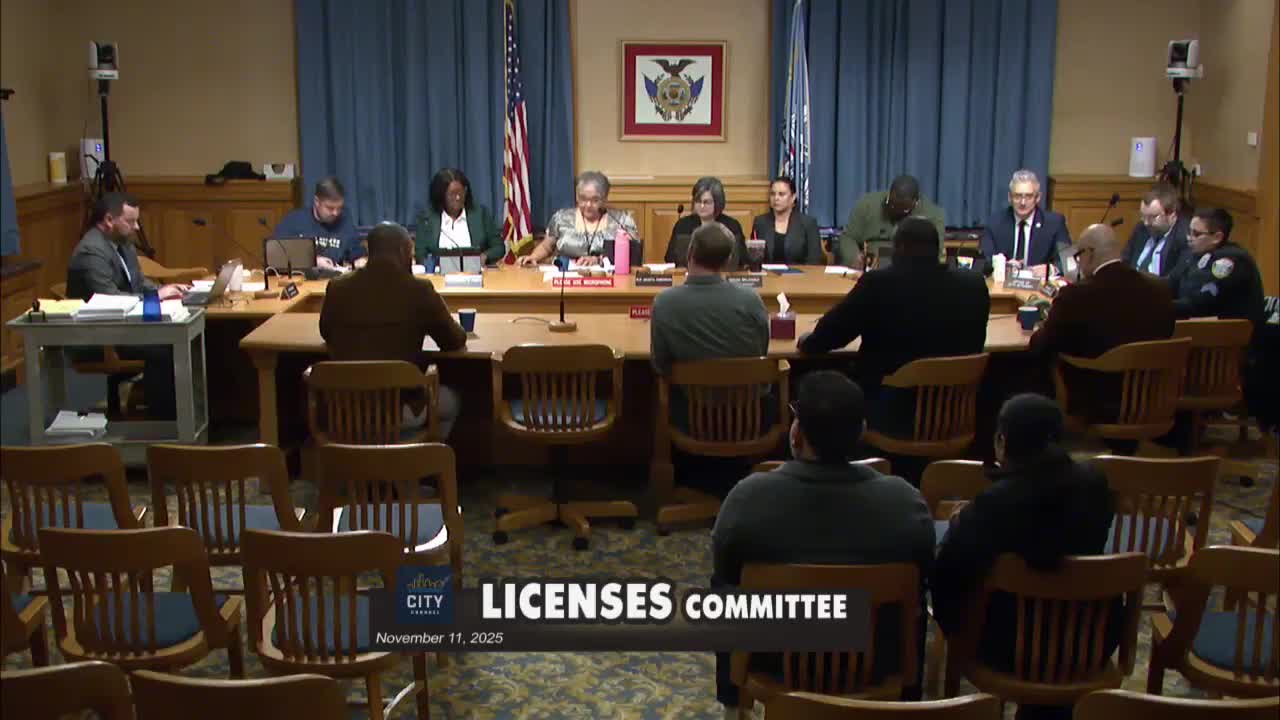
Licenses committee approves ordinance to regulate pop‑up event spaces, citing neighborhood disruptions
Loading...
Summary
The Milwaukee licenses committee passed an ordinance requiring commercial event spaces to register as public entertainment premises, notify neighbors and return after a year for review — a change sponsors say closes a loophole surfaced by Act 73. The committee moved the ordinance forward without objection.
Alderman Lamont Westmoreland introduced an ordinance (file #250666) on Nov. 11 that would expand the city’s public entertainment premises (PEP) rules to cover commercial event spaces converted from retail or other nonentertainment uses. Westmoreland said he drafted the change after constituents told him a former appliance store had been repurposed as an unregulated event space used for weddings, parties and similar gatherings that disrupted nearby residents. “Neighbors called and said, ‘how could you let this club open in my district,’” Westmoreland said, describing noise, alcohol and late‑night traffic.
Co‑sponsor Alderman Scott Spiker and other supporters told the committee the ordinance would require neighborhood notification, create a year‑long PEP license with a return review, and give the committee and licensing staff the authority to suspend or not renew licenses where problems continued. Licensing division manager Jim Cooney told the committee the proposal aligns temporary PEPs and annual licenses — temporary permits can still be used for one‑off events while regularly used commercial event spaces would need annual oversight.
Assistant City Attorney Travis Gresham said the ordinance is written as a time, place and manner restriction that fits within First Amendment protections while allowing the city to manage nuisance activity. He noted existing exemptions for religious, educational and charitable events. After discussion, Alderman Peter Bergellis moved passage; the chair called for objections and none were raised, so the committee ordered the ordinance to move forward.
What happens next: The ordinance will proceed through the council process. Supporters said it is intended to remove a loophole where operators avoid PEP rules by describing events as private, and to give neighbors formal notice and a chance to object before an annual license is granted or renewed.