Get Full Government Meeting Transcripts, Videos, & Alerts Forever!
Get email alerts on the Annexation Foster Lane topic
No spam. Unsubscribe anytime.
Planning commission recommends denial of Foster Lane annexation and comp‑plan amendment
Summary
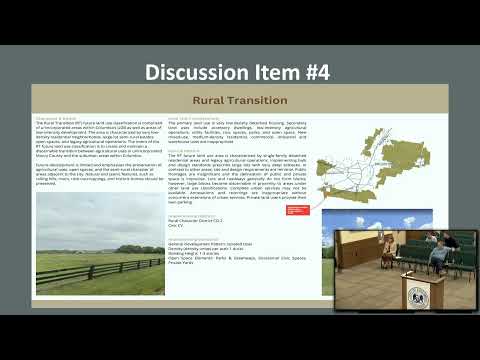
The Columbia Municipal Planning Commission voted to recommend denying an annexation and comprehensive‑plan amendment for property off Foster Lane after staff said the request conflicted with the city's rural transition designation; the applicant argued the proposed density (1.62 units/acre) is lower than nearby entitlements.
The Columbia Municipal Planning Commission voted to recommend denying an annexation and companion comprehensive plan amendment for property along Foster Lane, rejecting the applicant's request to change the property's future‑land‑use designation from Rural Countryside to Suburban Neighborhood and to rezone the parcel to CD‑3L.
Staff described the site as located in a designated rural transition/protect zone and told commissioners the requested rezoning would be inconsistent with the comprehensive plan's implementation policies. "This area has been designated as a protect zone," staff said, adding that the comp plan calls for minimal changes to established land use in such areas.
The applicant's representative, Jack Mayer of John Mayer Builders, argued the proposal would lower density relative to nearby entitlements and provide infrastructure improvements. "We're coming in at 1.62 units per acre," Mayer told the commission, and he said the project includes water‑line improvements and easements to provide access without relying on a rehabbed sewer line.
Commissioners focused on whether approving the amendment would undermine the recently adopted comprehensive plan and on whether CD‑2 zoning (a lower density option) had been sufficiently explored. One commissioner said substantial public time had been invested in the new comp plan and expressed reluctance to amend it so soon after adoption. The commission ultimately moved to deny the comp‑plan amendment and rezoning recommendation; the motion passed on a voice vote, and staff will forward the commission's recommendation to city council.
Why it matters: A recommendation to deny at the planning commission stage does not itself change zoning; the matter moves to Columbia City Council, which will make the final decision. The debate highlighted tensions between dev elopment proposals that aim to lower housing costs and the commission's interest in preserving the comp plan's rural transition policies.
Next steps: The applicant's proposal and the commission's recommendation will be included in material transmitted to city council for its consideration. The record in the planning commission hearing remains the primary staff evidence for that council review.