
Anaheim Elementary superintendent warns of $36 million deficit; outlines three operational risk areas
Get AI-powered insights, summaries, and transcripts
Sign Up Free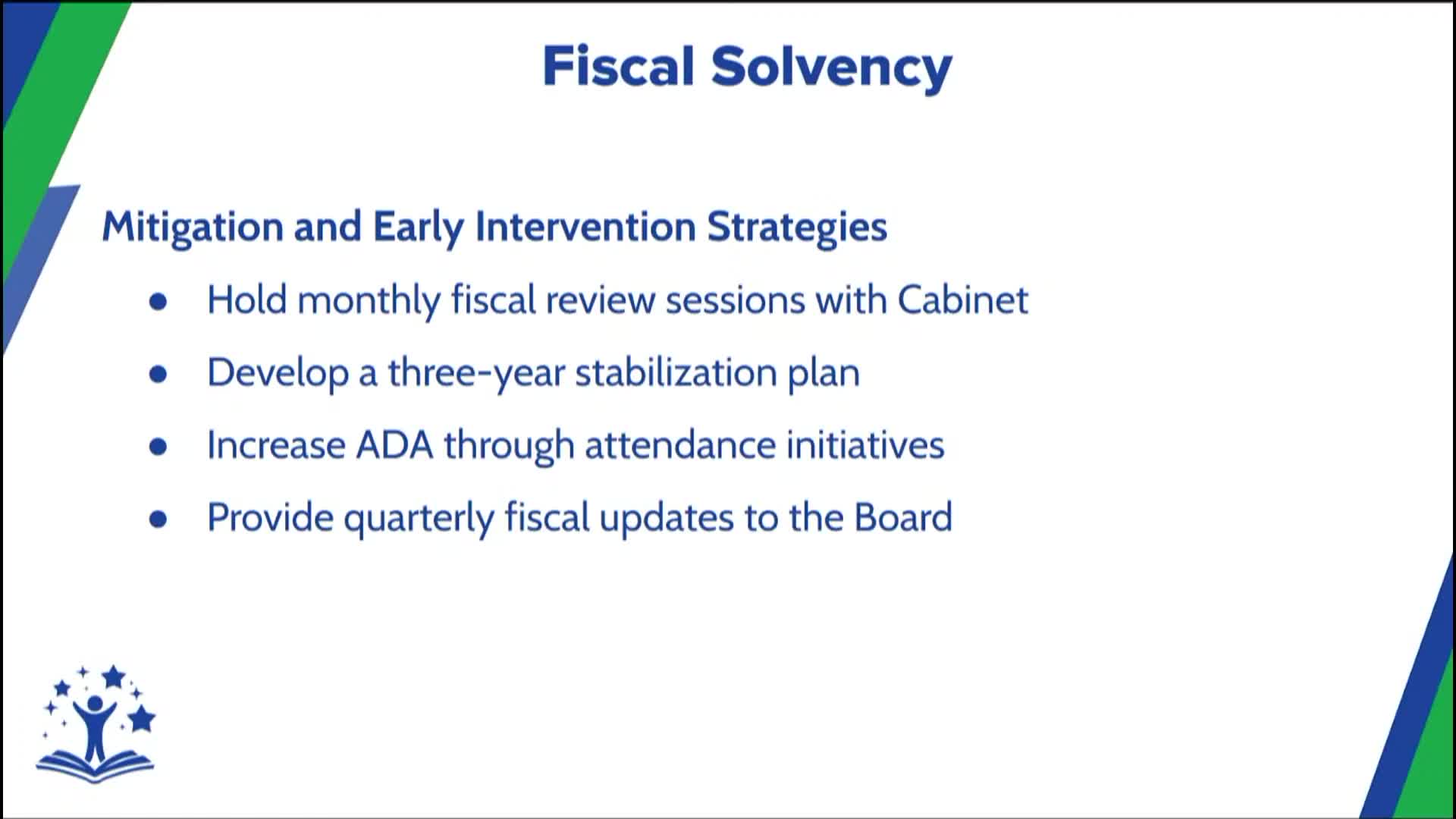
Summary
Superintendent Jesus Chavarria told the Anaheim Elementary School District board the district faces a projected $36 million operating deficit and identified three operational risks — fiscal solvency, special education performance/compliance, and chronic absenteeism — and proposed quarterly reporting and targeted task forces.
Superintendent Jesus Chavarria told the Anaheim Elementary School District Board on Nov. 12 that the district is running a projected operating deficit of $36,000,000 and outlined a plan to stabilize finances while addressing student support needs.
Chavarria told the board he will convene monthly fiscal review sessions with cabinet and pursue a three-year stabilization plan that examines vacancies, contracts, materials and conference spending to preserve a core program and extend the district’s financial runway. “We are running a deficit of $36,000,000,” he said, and added that the district currently holds an ending fund balance of about $90,000,000.
The superintendent identified two other operational risks that he said must be addressed alongside budget work. On special education, he flagged compliance and performance concerns — including Individualized Education Program (IEP) timelines — and proposed a compliance task force, targeted professional development for special-education and general-education teachers, and a dashboard to track special-education outcomes.
On attendance and student supports, Chavarria said chronic absenteeism remains high, at roughly 20 percent districtwide, and he described a package of measures to improve average daily attendance and student well‑being: redesigning site-based case meetings into smaller cohorts, establishing a districtwide MTSS (multi-tiered system of supports), and providing trauma-informed training for early-grade teachers to address behavior and mental-health needs.
Chavarria said those three priorities — fiscal solvency, special education, and attendance/mental health/behavior — will be the focus of quarterly updates to the board and of cross-department collaborations that may include retooling the district’s ‘cost team’ structure.
Board members did not take a formal vote on these proposals at the meeting; Chavarria said staff would return with timelines and regular fiscal updates.
Why it matters: A multi‑million-dollar deficit and high chronic absenteeism directly affect staffing, classroom resources and the district’s ability to sustain programs. The superintendent’s proposed combination of fiscal reviews, targeted compliance work in special education and expanded attendance/mental-health strategies signals a coordinated approach but also foreshadows potential budget trade-offs that could affect programs and personnel.