Get Full Government Meeting Transcripts, Videos, & Alerts Forever!
Get email alerts on the Vacant Property Registration topic
No spam. Unsubscribe anytime.
Toledo council set for first reading on cut to vacant-property registration fee
Summary
City staff proposed reducing the annual vacant-property registration fee from $200 to $100 to boost owner enrollment, improve contactability and strengthen enforcement; council scheduled a first reading and asked for a redlined ordinance. Staff estimated about 200 properties currently registered and roughly 3,300 vacant properties citywide.
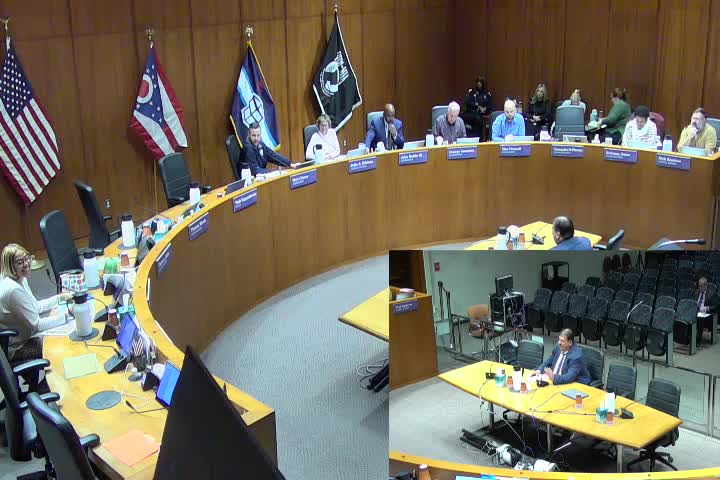
The Toledo City Council heard an ordinance review on Nov. 12 that would revise Chapter 17.67 to clarify enforcement and lower the annual vacant-property registration fee from $200 to $100.
Department of Building staff told council that the change is intended to encourage more out-of-town owners to register so the city can contact them about code violations. The presenter said roughly 200 properties are currently registered and estimated about 3,300 vacant properties in the city. "Lowering it down to $100, that would be about $300,000 that could be raised," the representative said while noting that is an upper-bound estimate if all vacant properties enrolled.
Council members pressed the department on enforcement and revenue details. The department said collected fees go into the nuisance-abatement trust fund and that enforcement will begin with a list of about 1,900 properties it believes are vacant; civil fines of $250, $500 or $1,000 are available for noncompliance. The department also pointed to the Lucas County Auditor's Rental Registration Program as a no-cost alternative for owners that can show a property is actively rented.
Councilwoman Jones asked staff to circulate a redlined version of the ordinance showing specific changes. The council set the measure for first reading to give members time to review the edited text and provide additional questions.
What happens next: The ordinance will return for formal readings; staff agreed to send the redline to all council members before the next step.