
Walton County adopts code-fines resolution and directs administrator to craft amnesty plan for long-standing liens
Get AI-powered insights, summaries, and transcripts
Subscribe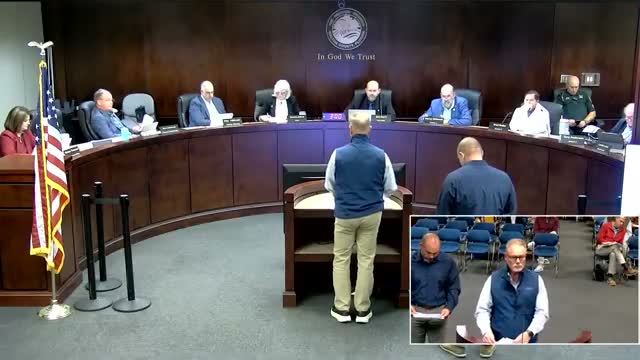
Summary
Facing more than $10 million in accruing code fines, Walton County commissioners adopted a resolution vesting limited settlement authority with the county administrator and directed staff to develop an amnesty-style program and pause new foreclosures while the backlog is addressed.
The Walton County Board of County Commissioners on Nov. 12 adopted a resolution to help address a backlog of code-enforcement fines and fees after a multi-hour discussion of scope and options.
Tony Cornman, Code Compliance Director, told the board that cases where respondents have gained compliance but still owe fines total $930,751; properties with continuing assessed fines amount to roughly $10.38 million. Cornman said some individual accounts have very large balances, including a single parcel at $888,450.
The chair proposed an approach aimed at cleaning up the backlog quickly: properties already in compliance could pay a settlement amount (the chair suggested 10% as an initial concept) by a set date to clear liens, while noncompliant properties would face standard foreclosure or lien enforcement. Commissioners debated whether a flat-percentage approach would be equitable; staff and the county attorney recommended vesting settlement discretion in the county administrator with policy guardrails to avoid one-size-fits-all deals that unjustly benefit sellers.
The board adopted the resolution and concurrently directed the county administrator to: pause active foreclosure actions under the new resolution while staff drafts an amnesty program, return a detailed amnesty proposal at the next meeting (including proposed deadlines and projected revenue recovery), and negotiate case-by-case settlements under limits described in the resolution. Commissioners emphasized the measure is intended to encourage voluntary compliance and remove titles that hinder property sales while protecting the county from being shortchanged when properties change hands.
Why this matters: The County is working to reduce a long-standing administrative and financial burden that has accumulated over many years. Board members said the approach strikes a balance between helping residents who unintentionally accumulated fines and preserving the county's ability to recover costs and require property remediation.
Next steps: Staff will draft the amnesty program and return with specific parameters and projected fiscal impact for board approval. The resolution vests negotiating authority in the county administrator subject to the board's policy direction.