
Nassau Bay holds first reading of ordinance to tighten rules on derelict and unmanned vessels
Get AI-powered insights, summaries, and transcripts
Subscribe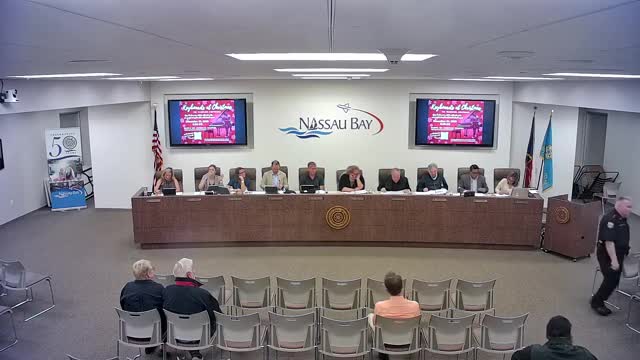
Summary
Council members held a first reading of an ordinance clarifying definitions for neglected or deteriorated vessels and adding a presumption for unmanned vessels left 48 hours or more; the change is intended to aid enforcement and was set for a second reading after council asked staff and attorneys to clarify evidentiary and jurisdictional details.
The Nassau Bay City Council on Oct. 16 held a first reading of an ordinance amending Chapter 9 (Health and Sanitation) to clarify the city’s derelict or neglected‑vessel rules and add a new condition that treats unmanned vessels left for 48 hours as an offense.
City Attorney explained the change makes clear that the liable “offender” need not be the registered owner of a vessel. That wording aims to address patterns where marina operators or others move and abandon craft in public waterways; council members said the change would help police and prosecutors pursue those responsible rather than only the registered owner.
Council discussed enforcement and penalties. The city attorney and council noted municipal court discretion on fines; some municipal offenses can carry a maximum fine up to $2,000 where state law allows, but most Class C municipal citations carry lower maximums unless statute criteria are met. The city’s approach is to rely on the ordinance language and present evidence at prosecution to support higher penalties when public safety factors apply.
Members asked practical questions about evidence (how to show an unmanned vessel was present for 48 hours), whether finger piers or city‑owned docks are covered, and if boats tied to a tree or otherwise secured would count as anchored in a public area. Police said camera coverage would help prove duration but emphasized officer safety and jurisdictional limitations when boats end up in adjacent county waters.
No final vote was taken; council accepted the attorney’s suggested edits and held the item over for a second reading.
What’s next: Staff and the city attorney will finalize ordinance language and provide clarifying guidance on enforcement and how evidence will be presented to municipal court at the second reading.