
Ballston Spa trustees deadlock on local ‘good cause’ eviction law after heated public comment
Get AI-powered insights, summaries, and transcripts
Subscribe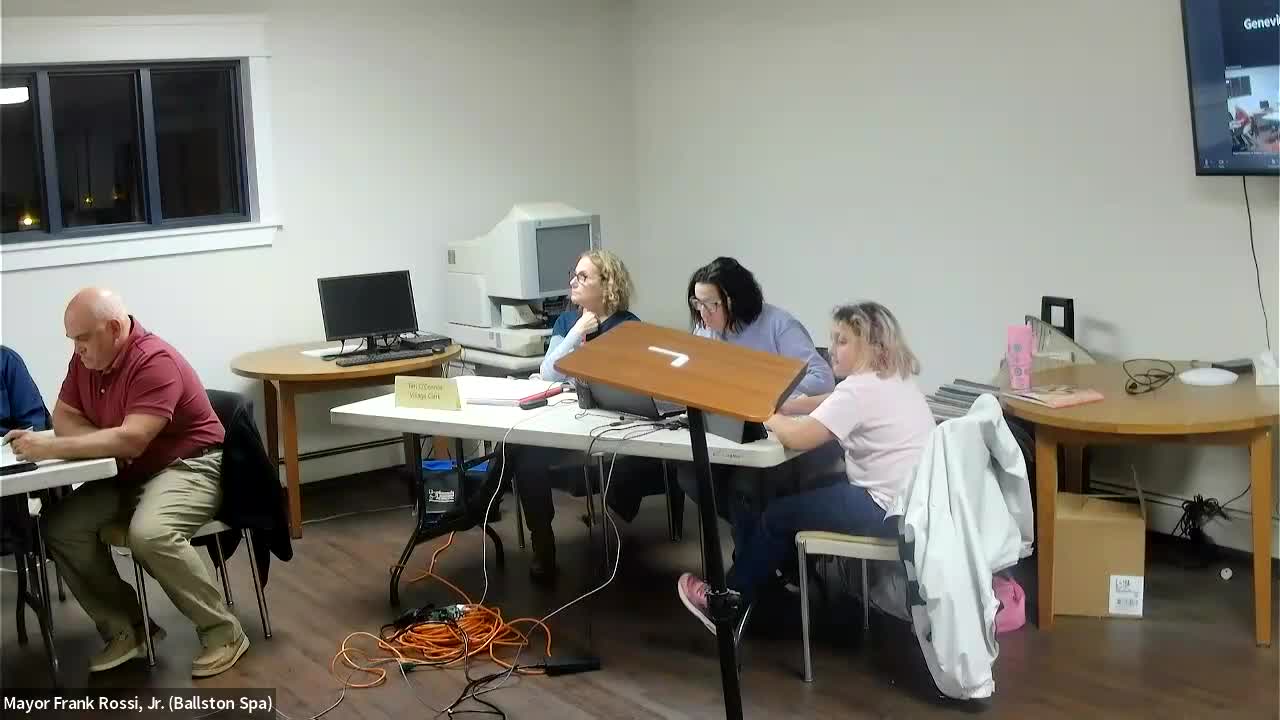
Summary
After extensive public testimony and trustee debate, a motion to have village counsel finalize a local good-cause eviction law for a Dec. 8 public hearing failed on a 2–2 roll call with the mayor abstaining.
Ballston Spa trustees deliberated for more than an hour on whether to advance a local "good cause" eviction law but failed to move the measure forward after a tie vote.
Genevieve, organizing director at Housing Justice for All, told trustees the model law would protect tenants who follow their leases and pay rent from unexplained nonrenewals and unjust evictions, and that municipalities across the state have adopted similar rules. “If you follow the rules of your lease and you pay your rent, you get to stay in your apartment,” she said during public comment, arguing the change stabilizes neighborhoods without banning reasonable rent increases.
Trustees split over the local need and potential burdens on small landlords. Trustee (speaker 6) said the law protects tenants without preventing landlords from evicting for nonpayment, nuisance or demolition; Trustee (speaker 5) and other trustees warned it could impose difficulties on small, resident landlords, citing lengthy eviction processes.
On the motion to have village counsel finalize the draft and set a public hearing for Dec. 8, 2025, the roll call produced two yes votes, two no votes and one abstention by the mayor, leaving the board unable to advance the proposal. The chair said the motion had failed at that point.
The debate left several procedural items unresolved: trustees asked for the draft language to be provided to the board and public before any final hearing, and residents asked for clarification about exemptions and whether the proposal would apply to short-term rentals. Village staff said some housing types would be exempt under the model statute (notably newer units, certain regulated housing and owner-occupied small buildings) but that exact local language had not been finalized.
Next steps: trustees did not set a follow-up vote; the matter may return to the board after additional revisions or a future motion to set a hearing.