Will County committee hears presentation on federal Educational Choice for Children Act, defers decision
Loading...
Summary
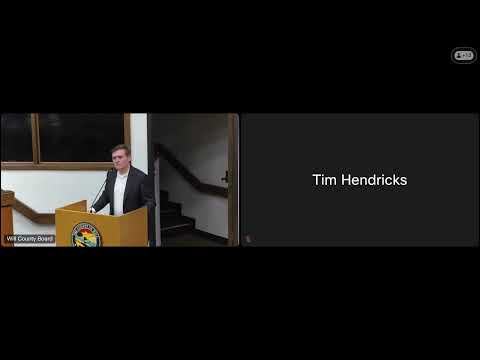
Dylan Sharkey, assistant editor at Illinois Policy, told the Will County Executive Committee the Educational Choice for Children Act would let families use federal scholarship tax credits for ACT/SAT prep, AP exam fees and some services for students with disabilities.
Dylan Sharkey, assistant editor at Illinois Policy, told the Will County Board Executive Committee the Educational Choice for Children Act (a federal scholarship tax credit proposal brought to the committee by Mr. Balich) would let families use federal scholarship tax credits for services such as ACT/SAT preparation, AP exam fees and some therapies for students with disabilities. “Imagine a student who wants to retake the ACT or the SAT, or maybe they want to enter the trades with dual enrollment in their school,” Sharkey said, arguing “these things come with costs” and asking whether money should determine access.
Members sought factual clarification about how the credit would operate. Committee member Balich and Sharkey said the proposal envisions a dollar-for-dollar federal income tax credit commonly discussed in the packet as a $1,700 figure; Sharkey cautioned that the final details could change during federal rulemaking. “It's a dollar-for-dollar,” Sharkey said when a board member asked whether donors would effectively receive the full amount back on federal taxes.
Several members raised concerns about administration and equity. Member Newquist asked how scholarships would be awarded and whether a school must participate; Sharkey replied scholarships would be distributed through scholarship-granting organizations, a special class of nonprofit, and that such organizations would be set up or designated to administer credits. Other members warned the program could divert resources or advantages away from public-school students if not carefully implemented. One member said, “I’m not in favor of anything that takes resources away from our public schools.”
Members also debated logistics and timing for placing a referendum on the ballot. There was confusion about deadlines and whether to present the question on a primary ballot; staff later confirmed a deadline relevant to the primary ballot of December 29, 2025, if the committee wished to place the referendum before that date. Chair concluded there were still outstanding questions and recommended keeping the item in committee discussion and returning it next month for a vote; members agreed to bring the item back to the Executive Committee so it can meet the stated filing deadline if the board moves forward.
What happens next: The Executive Committee kept item 25-3399 in discussion and will return it to the December agenda for a vote if members choose to proceed. The committee’s action preserves the option to place a referendum before the December 29, 2025 deadline, per staff guidance.