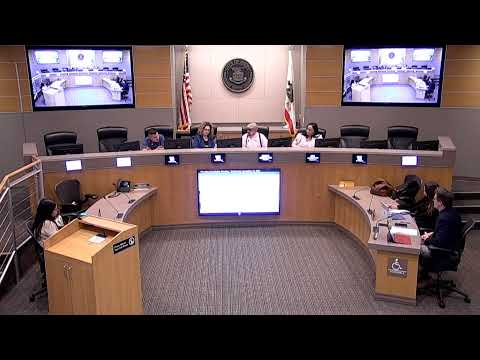
Indio planning commission urges City Council to consider pause and study of new gas stations
Loading...
Summary
After a staff study session on landscaping and EV chargers, the Indio Planning Commission debated whether to recommend a moratorium and a feasibility market study for new gas stations; public comment urged an immediate temporary application hold while staff compiles data for Council.
Gustavo Gomez, principal planner in the Community Development Department, presented research on landscaping and electric‑vehicle (EV) charging infrastructure related to proposed gas stations, reminding commissioners that City Council directed staff to study gas‑station permitting after the Maverick station appeal. Gomez said staff reviewed the California Green Building Code, the Coachella Valley Association of Governments urban greening guide and regional resources to create a sample palette of native, water‑efficient trees and to evaluate EV‑capable parking requirements.
During public comment, longtime Indio resident Jackie Lopez urged the commission to recommend an immediate temporary application hold while the feasibility study is completed. "A pause is not a ban. It's a responsible measure to ensure that the city's planning decisions are deliberate, data driven, and in the community's best interest," Lopez said.
Commissioners disagreed about whether a prior meeting produced a formal recommendation to the council. Some members said the commission had reached a consensus at an earlier meeting but did not take a formal vote; others said no official recommendation had been adopted. Staff clarified that a consultant has not yet been hired and that the commission's input tonight — including on landscaping and EV requirements — will be compiled and forwarded to City Council so the council can decide whether to direct staff to fund a study or draft a moratorium.
Staff also advised the legal mechanics of a moratorium: under the cited Government Code provisions described at the meeting, an urgency moratorium would take immediate effect for 45 days and may be extended after public notice and hearing for up to an additional 22 months and 15 days (a total of up to 24 months), if Council chooses to pursue that route.
On the status of applications, staff corrected public reports of filings: there is one pre‑application expressing interest but no full applications formally submitted at the time of the meeting. Commissioners pressed staff to define the feasibility or market‑study scope and timeline if a moratorium is recommended, suggesting specific timeframes (for example, 45–90 days or up to six months) and clear research questions so the public understands the process.
The commission did not adopt a moratorium during the meeting. Instead, it provided staff with guidance to include the commission's feedback in a staff report to City Council, including concerns about potential oversaturation in neighborhoods with higher pollution burdens and requests for study parameters and an evaluation of community impacts.
Next steps: staff will compile the commission's written recommendations, add the research already performed (gap analysis and regional guides), and forward the packet to City Council; Council will then decide whether to fund a study or adopt an urgency moratorium.