Get Full Government Meeting Transcripts, Videos, & Alerts Forever!
Get email alerts on the Park Disposition topic
No spam. Unsubscribe anytime.
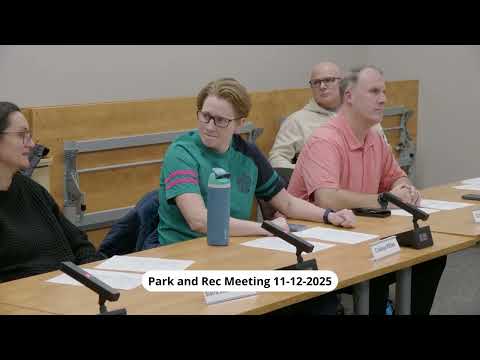
Marshfield parks committee resists listing neighborhood parks for sale amid budget talk
Summary
Committee members pushed back on a council request to identify parks that could be retired or sold, arguing neighborhood identity and limited fiscal benefit outweigh possible savings; staff will research deed restrictions and return with focused recommendations.
Marshfield’s Parks, Recreation & Forestry Committee pushed back against a council request to identify parks that might be retired or sold, saying the neighborhood and quality-of-life costs of eliminating small parks would likely outweigh any modest revenue. The committee instead asked staff to research legal constraints and return with targeted information on a small set of candidate properties.
Justin, parks staff, opened the item by describing a list of parks suggested for review and the constraints the city would face, including deed restrictions, grant conditions and the city’s parkland dedication policy. "There is no reliable method to track park or trail usage" now, he said, noting the department stopped replacing failed trail counters and that a vendor solution previously discussed would cost about $19,000 a year.
The committee’s strongest opposition came from the chair, who said in her role she "do[es] not support putting a single park on the list," and from other members who argued neighborhood parks give identity and gathering space to communities. Members cited Benedict and Forest Ridge as examples not appropriate for sale. Staff agreed some small parcels have little infrastructure and low maintenance costs (several small sites were described as under $1,000 annually), but warned that selling land purchased or dedicated for parks could clash with the city’s own parkland-dedication rules and future developer expectations.
Members directed staff to avoid a blanket review of all 19 parks. Instead, they asked for a narrower next step: identify which parks have deed or grant restrictions and prepare an options memo on a short list (for example, Project Wayside, Pickle Pond or Conner) that could be evaluated for repurposing or transition to lower-maintenance status. "If we said Benedict was, you could put two houses on there, I'd say at the expense of destroying the whole neighborhood," the chair added, urging caution.
Staff said they would return with more background next month, including legal review of restrictions and a clearer estimate of the likely financial benefit versus community cost. No formal disposition or sale was approved; the discussion was tabled for further study.