Get Full Government Meeting Transcripts, Videos, & Alerts Forever!
Get email alerts on the Zoning Variance topic
No spam. Unsubscribe anytime.
Kenosha board approves variance for Islamic center fence despite staff recommendation to deny
Summary
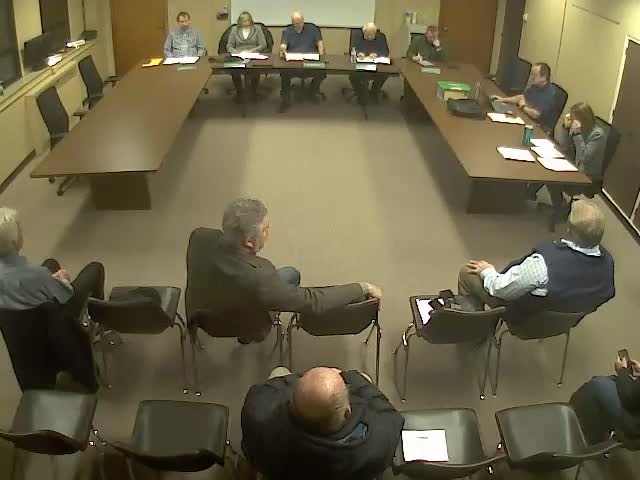
The Kenosha board of commissioners on Nov. 11 approved a zoning variance allowing existing gate and fence elements at the American Albanian Islamic Center, 6001 88th Avenue, after hearing applicant testimony and staff objections that the installation violates vision-clearance requirements; the motion passed on a 4-1 voice vote.
The Kenosha board of commissioners approved a variance Nov. 11 allowing existing gate and fence elements at the American Albanian Islamic Center, 6001 88th Avenue, after a public hearing and debate over safety and enforcement. City staff had recommended denial, saying the request did not meet the findings required by the zoning ordinance.
The board heard from applicant board member Amir Ishagiri, who described the entrance gates and iron fence as existing for "10 to 12 years," said "we've had no complaints, no incidents," and told commissioners the center lowered stone pillars at the gates after being notified by the city and incurred about $15,000 in additional costs. Ishagiri said a phase-two fencing project was completed in February and that the gates are typically kept open during business hours.
City staff argued the variance should be denied on legal grounds. Staff told the board the application did not meet the ordinance's four variance criteria, citing preservation of intent, exceptional circumstances, economic hardship and public safety. Staff also presented written communications and emails they said showed a contractor had agreed to build to 4-foot clearance and later constructed something different, calling that a "self-imposed hardship." "Our recommendation is made to deny the variance request," a staff presenter told the board.
Gary Roberts, director of city inspections, explained the department's enforcement and inspection process: when permit work is complete the permit holder must call in for final inspection, and older permits without inspection calls can be administratively closed. Roberts said the city maintains logs of open permits but will close permits that are not finalized.
Several residents and a nearby elected official spoke in support of the applicant. Alderman Art De Vera (17th District) said he lives within blocks of the property, "I've never had any complaints from any neighbors," and called the property "well kept" and "aesthetically immaculate." AXL Fence Company representative Racio Barnegash said his firm was not the original installer and that the gates are typically left open; he provided photos of the entrance and stated his firm did not install the earlier gates.
Commissioners discussed whether the 2015 installation could be grandfathered, whether the safety risk was present today or premised on future development (for example, a potential sidewalk), and whether the orders issued applied to both the pillars and the required 15-foot vision-clearance zones on either side of the driveway. Staff emphasized the ordinance requires the first 15 feet past driveway pillars to remain at or below four feet to maintain sight lines.
A commissioner moved to approve the variance; the motion passed and the chair announced the ayes had it. The board recorded four ayes and one nay on the motion. The meeting was then adjourned.
The variance pertains to the city's vision-clearance provisions in the zoning ordinance (section 2.06(b)), and staff cited section 9.05(b) in recommending denial. The record shows the board approved leaving the gates and associated fence elements as constructed; staff described enforcement orders issued earlier in 2025 related to the same openings. No additional regulatory conditions or next steps were specified in the public discussion before adjournment.