Get AI Briefings, Transcripts & Alerts on Local & National Government Meetings — Forever.
Developer seeks MPDO approval for Babylon Lands; commission tables concept pending more data and site visit
Loading...
Summary
Babylon Lands LLC presented a conceptual MPDO for 80 acres that would dedicate Devil—s Hole as public open space in exchange for density bonuses and potential commercial uses including an amphitheater; planning staff and commissioners asked for missing materials, traffic and water analysis, and a field trip, then voted to table the application.
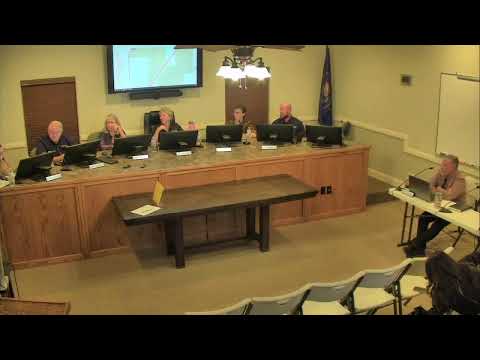
Paul Morris, manager of Babylon Lands LLC and chair of the land district involved, presented a conceptual master planned development overlay (MPDO/NPDO) for property near Devil—s Hole and asked the Toquerville Planning Commission to consider conceptual approval.
Morris said the district—s role would be primarily to finance infrastructure—the district would bond for curb, gutter and sidewalk improvements and turn operating utilities (water and sewer) over to the city. He told the commission the applicant intends to "give it free of charge for public use" and to "protect Devil's Hole in perpetuity," and suggested options for transferring title either to Tocqueville City or to a separate public infrastructure district to limit liability.
Adam Allen of American Consulting & Engineering explained the concept plan: lower-density residential lots would face Tocqueville and a separate planning area near Devil—s Hole could include higher-density or commercial uses. Morris and the applicant team also floated an amphitheater concept and said the development could include deed-restricted workforce townhomes as an alternative if commercial uses do not proceed.
Planning staff briefed commissioners that the MPDO application was missing several checklist items required for a conceptual review, including a complete design-team qualifications list, a clear type-and-number uses table for nonresidential areas, and maps showing building locations and access flows. Staff said the MPDO ordinance allows the commission to request additional standards and that any motion should be conditional on receipt of those missing materials.
Commissioners and staff pressed the applicant on several key points: access across Bureau of Land Management (BLM) land (the applicant has been working with BLM but said the process has been slow), which access option the project would rely on, water availability and conservation standards, and whether the city or a separate district should hold the protected land. The applicant said the district can hold the land and suggested creating a small Devil—s Hole public infrastructure district if that would reduce liability.
The discussion also covered bonuses requested for public-open-space dedication (applicant initially proposed a 10% bonus and staff noted cumulative bonuses up to roughly 25% had been requested; the ordinance allows up to a 30% cumulative bonus in some cases), and traffic and water analyses. Staff and multiple commissioners said an amphitheater would change the scope of environmental and traffic review and that a traffic-impact study should be required if the applicant pursues large public-assembly uses. On water, the applicant and staff cited regional conservation standards and reported that new development will be subject to stricter per-unit water allowances.
Commissioners requested more specific documentation of planned nonresidential uses (including counts or clear examples such as "amphitheater" or "hotel/cabins"), confirmation of required BLM approvals for access, and the missing items from the conceptual checklist. Several commissioners asked staff and the applicant to arrange a field trip so members could stake and view the site before any recommendation.
After discussion, a commissioner moved to table the conceptual MPDO review until staff is satisfied with the additional materials and a site visit has been completed. The motion carried. The commission did not grant conceptual approval; the applicant agreed to provide the requested materials and to coordinate the field visit with staff.
What comes next: the applicant will supply the checklist materials staff identified, coordinate BLM approvals where needed, and schedule a field visit with the commission. The MPDO process will return to the commission for preliminary and final reviews, which will require more detailed engineering, building-site layouts, and any required traffic, water, or fiscal analyses.