Get Full Government Meeting Transcripts, Videos, & Alerts Forever!
Get email alerts on the Executive Session topic
No spam. Unsubscribe anytime.
Prince George's County Board of Education votes 7-0 to close Nov. 6 meeting for oral arguments and personnel/legal discussions
Summary
The Prince George's County Board of Education voted unanimously on Nov. 6 to close its special virtual meeting to hear oral arguments and to discuss matters related to employee identities and ongoing or anticipated legal disputes, citing General Provisions Article §3-305(b).
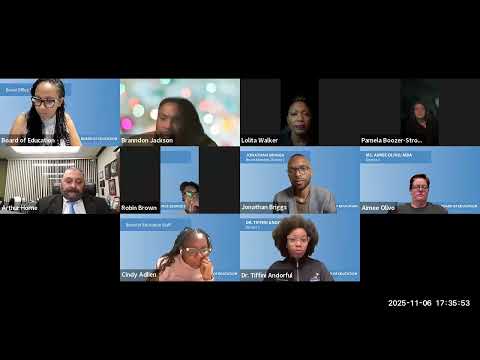
Prince George's County Board of Education Chair Brandon Jackson said the board voted 7-0 on Nov. 6 to close a special virtual meeting so it could hear oral arguments and discuss personnel matters and ongoing or anticipated legal disputes.
Jackson opened the meeting at 5:33 p.m., recited the board's Internet meeting rules (requiring cameras on, muting except when recognized and limiting members to two two‑minute speeches per motion), and asked the clerk to call the roll. He then read the board's formal closing statement and cited the legal authority for a closed session: General Provisions Article §3‑305(b) clauses 1, 2, 7, 8 and 12. Jackson said the matters to be discussed included oral argument and issues involving employees' identities and legal disputes, which "could result in financial losses, damage to reputation, or legal consequences," according to the statement he read.
The clerk conducted a roll-call vote; the minutes record seven ayes and the chair declared the motion adopted. The board then instructed members to exit the public meeting and promptly join the special closed session via the link in their calendar invitations.
No substantive public discussion of the matters to be heard in closed session took place on the public record during the portion of the meeting in the transcript. The record shows only the procedural steps to convene the closed session and the unanimous vote to do so.
The board did not provide additional detail in the public record about the subject matter of the oral arguments or the specific personnel and legal issues to be discussed. The meeting notice and the chair's statement identify the general bases for a closed session under the cited provision but do not specify parties, case names, or staff members involved.