
Hendry County commissioners approve comprehensive-plan amendment and rezoning for 1,100‑acre private resort and golf community
Get AI-powered insights, summaries, and transcripts
Sign Up Free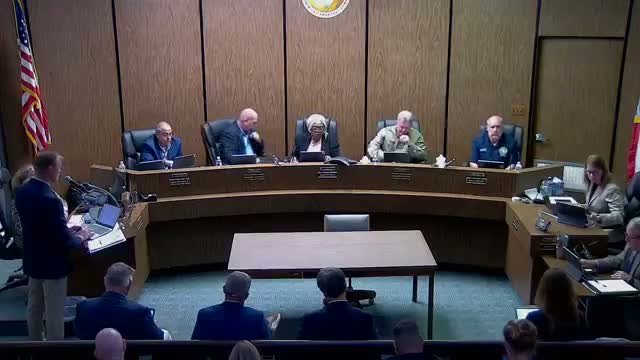
Summary
The Hendry County Board approved a site-specific comprehensive-plan amendment and a phase‑1 rezoning for a 1,100‑acre former prison site to allow a private resort and golf course. Commissioners cited conditions requiring on‑site public‑safety facilities, MSBU funding for services, and further state permitting for environmental protections.
Hendry County commissioners voted unanimously Nov. 12 to approve a comprehensive‑plan amendment creating a new "private resort recreation" future land‑use designation and to rezone the phase‑1 portion of a 1,100‑acre former prison site for a private golf‑resort development.
The board’s decision follows extensive hours of staff presentations, applicant briefings and public questioning about infrastructure, environmental review and long‑term land‑use implications. Ryan Alexander, Hendry County director of planning and community development, told commissioners that his office was concerned the permanent land‑use designation could encourage "urban sprawl," noting the property is remote and that questions remain about whether it would maximize the use of existing public facilities. "I believe that this is encouraging urban sprawl," Alexander said during his presentation.
The applicant, represented by Kate English of South Florida Ops and planner Alexis Crespo of RVI, said the project is a redevelopment of an already developed site with historic on‑site utilities and that safeguards are in place. "The Department of Commerce ... thought it was an appropriate redevelopment of a developed space," English said, arguing state reviewers did not raise sprawl objections. Crespo emphasized a phased approach: phase 1 would include an 18‑hole golf course, clubhouse and up to 100 transient lodging 'casitas' and infrastructure (on‑site water/sewer) paid for by the developer; up to 350 single‑family homes were described as a possible phase 2 subject to a future PUD rezoning and additional approvals.
To reduce county risk, applicants proposed and staff recommended several conditions. Those include executed agreements or contracts ensuring the provision of fire, EMS and sheriff services and an MSTBU (municipal service taxing and benefiting unit) to fund on‑site infrastructure and long‑term operations so county taxpayers would not be responsible for developer‑provided services. Crespo said the county would not issue certificates of occupancy for phase‑1 development until such executed agreements were in place.
Transportation analysis by consultant Yuri Baikow concluded the roadway network would meet adopted level‑of‑service standards under build‑out scenarios; Baikow said FDOT reviewed the application and "clearly mentioned that the proposed amendment has no significant adverse impact to transportation resources." The applicant also presented economic estimates, including a projection of about 300 jobs at full build‑out and a cited long‑term tax revenue estimate the team summarized as roughly $11 million over a decade and an annual property‑tax estimate shown on a slide of roughly $633,000 at a specific build stage.
Commissioners pressed the applicant on several specifics: timing and minimum standards for on‑site emergency facilities, whether facilities would be adequate for peak demand, how the MSBU would be structured, and the need for protected‑species surveys and coordination with the South Florida Water Management District, Florida Fish and Wildlife Conservation Commission (FWC), the U.S. Army Corps of Engineers and the U.S. Fish and Wildlife Service given proximity to panther habitat. Applicant teams acknowledged those additional permits and said they would address them in the permitting and site‑development process.
After discussion, Commissioner Raymond Iglesias moved to approve the comprehensive‑plan amendment including the residential element; the motion passed on a recorded roll‑call vote with Commissioners Atkinson, Howard, Iglesias, Wills and Chair Emma Bird voting "Yes." The board then approved the phase‑1 rezoning and its staff‑recommended conditions, also by unanimous roll call.
What’s next: The approvals vest a policy framework in the county’s comprehensive plan and authorize phase‑1 rezoning with conditions. Any development of single‑family homes will require a later PUD rezoning, additional site‑development review, executed intergovernmental and service agreements, and state and federal environmental permits.