
Portsmouth school health supervisor urges hiring unlicensed assistants and more nurses to address staffing gap
Get AI-powered insights, summaries, and transcripts
Sign Up Free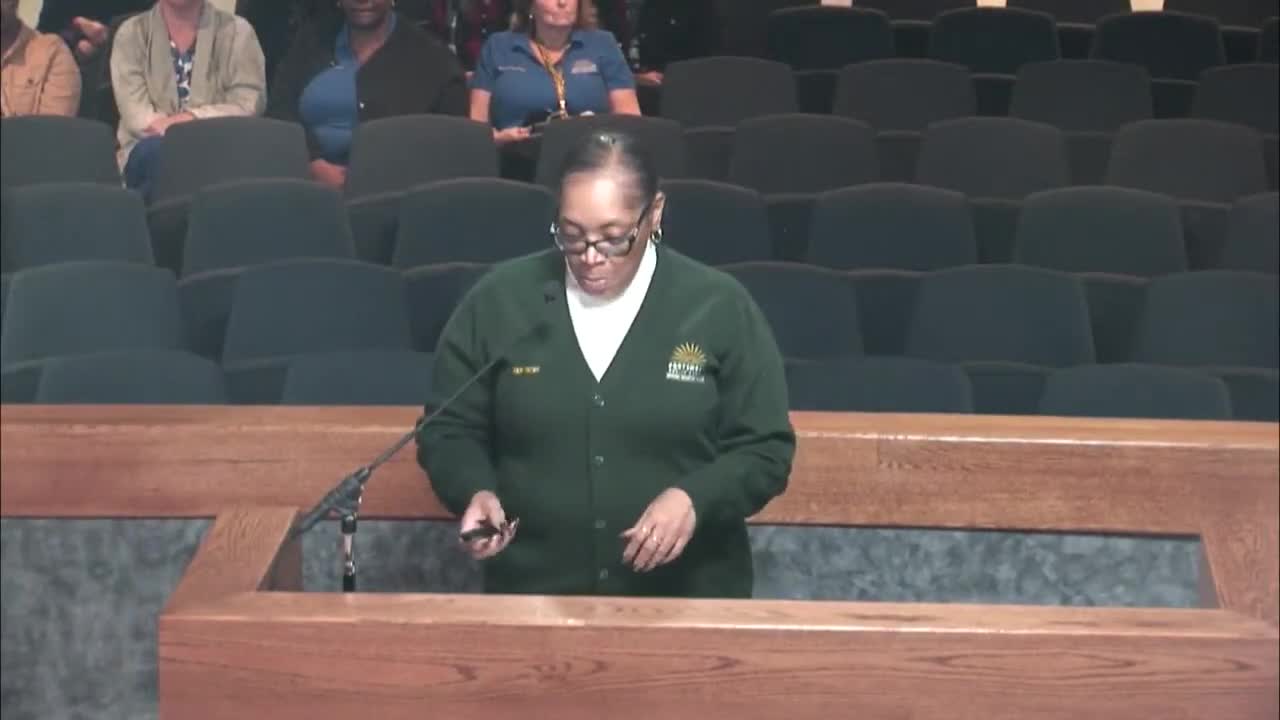
Summary
Supervisor Lisa Rountree told the board Portsmouth has 10 RNs for 12,717 students, cited national recommendations for 28 RNs, and requested funding for up to 10 unlicensed assistive personnel and consideration of additional RN hires to reduce risk to medically fragile students.
Lisa Rountree, supervisor of health services for Portsmouth Public Schools, urged the board on Nov. 6 to fund additional clinic staff after outlining a persistent nursing shortage. "We have currently have 10 RNs, including myself and the team leader," Rountree said, and described how that level of staffing forces nurses and classroom staff to triage urgent medical needs across multiple schools.
Rountree told the board there are 12,717 students in the district and 3,528 students with chronic conditions who sometimes require daily professional nursing services; she said national guidance suggests a nurse‑to‑student ratio of 1:225 for students with chronic conditions and 1:750 for the general student population. Using those metrics, she said, Portsmouth would need roughly 28 RNs to meet recommended levels.
To improve day‑to‑day coverage, Rountree requested funding for unlicensed assistive personnel (UAPs) — clinic assistants such as medical assistants or CNAs — asking for "up to 10 full time unlicensed assistive personnel" (or a mix of full‑ and part‑time positions) to free RNs for complex care and coordination. She said LPNs and UAPs can assist under RN supervision but cannot replace registered nurses.
Board members asked about recruitment barriers; Rountree cited pay as a major factor and noted some staff pursue RN licensure while working. Vice Chair Atkinson and other members suggested exploring pipelines and education supports for LPNs to move to RN roles; the meeting record shows the board agreed to consider the positions during budget planning but did not adopt a funding commitment at the session.
Why it matters: Rountree framed the request as a student‑safety and academic‑support issue: with insufficient clinic staffing, nurses are diverted from coordinating legally required individualized health care plans and mandated screenings, which can create legal and educational risk.
Next steps: The board did not take an immediate vote to fund the positions; Rountree asked the board to "consider" the roles during budget development and the board signaled interest in exploring recruitment and compensation strategies.