
Local organizers warn Dunn County supervisors that HR1 could shift costs for SNAP, Medicaid and long-term care
Get AI-powered insights, summaries, and transcripts
Sign Up Free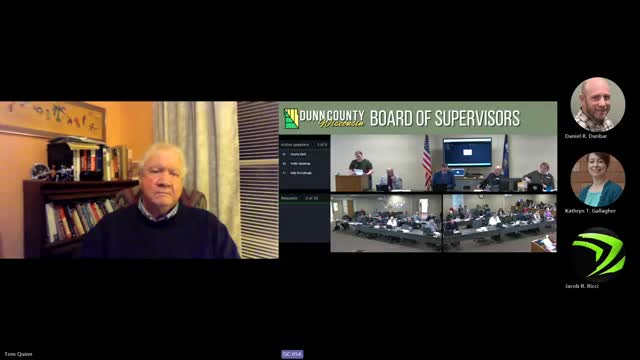
Summary
A GROW representative told Dunn County supervisors that federal legislation (referred to as HR1) could reduce federal administrative funding for SNAP and change Medicaid rules, potentially increasing local costs and straining county services including the county-run nursing home, and submitted a letter for the public record.
At the Nov. 11 public hearing on the proposed 2026 budget, Jennifer from GROW (Grassroots Organizing Western Wisconsin) urged Dunn County supervisors to anticipate and plan for federal policy changes she said are contained in H.R.1.
Jennifer said H.R.1 would cut the federal share of SNAP administrative funding from 50% to 25% beginning in 2027 and that the county's income maintenance budget (quoted in testimony as about $1,400,000) could face $45,000 to $175,000 a year in new local costs depending on how the state allocates the shortfall. She also cited state estimates that over 400 Dunn County residents could be at risk of losing Medicaid coverage because of anticipated paperwork and eligibility rule changes, which would shift costs to county-funded services including behavioral health and the sheriff's office.
"Beginning in 2027, H.R.1 cuts the federal share of SNAP administrative funding in half, from 50% to 25%," Jennifer said, and urged the board to "anticipate the fiscal stress that's coming before it forces service reductions."
Why it matters: County staff and supervisors did not produce an alternative, line-by-line county cost estimate during the meeting, but both supervisors and the presenter agreed that reduced federal support could produce cascading demands on county services and budgets. The Neighbors, the county-run nursing facility, was cited as relying on Medicaid for roughly 70% of its revenue; even a small funding gap could translate into six-figure pressure on county budgets according to testimony.
What happened next: The board received the letter for the record and closed the hearing. Supervisors asked procedural questions about including contact information in the record; the clerk confirmed the speaker's information was on file.