
Johnson County unveils 'foundational' transit plan to boost frequency, shrink microtransit footprint
Get AI-powered insights, summaries, and transcripts
Subscribe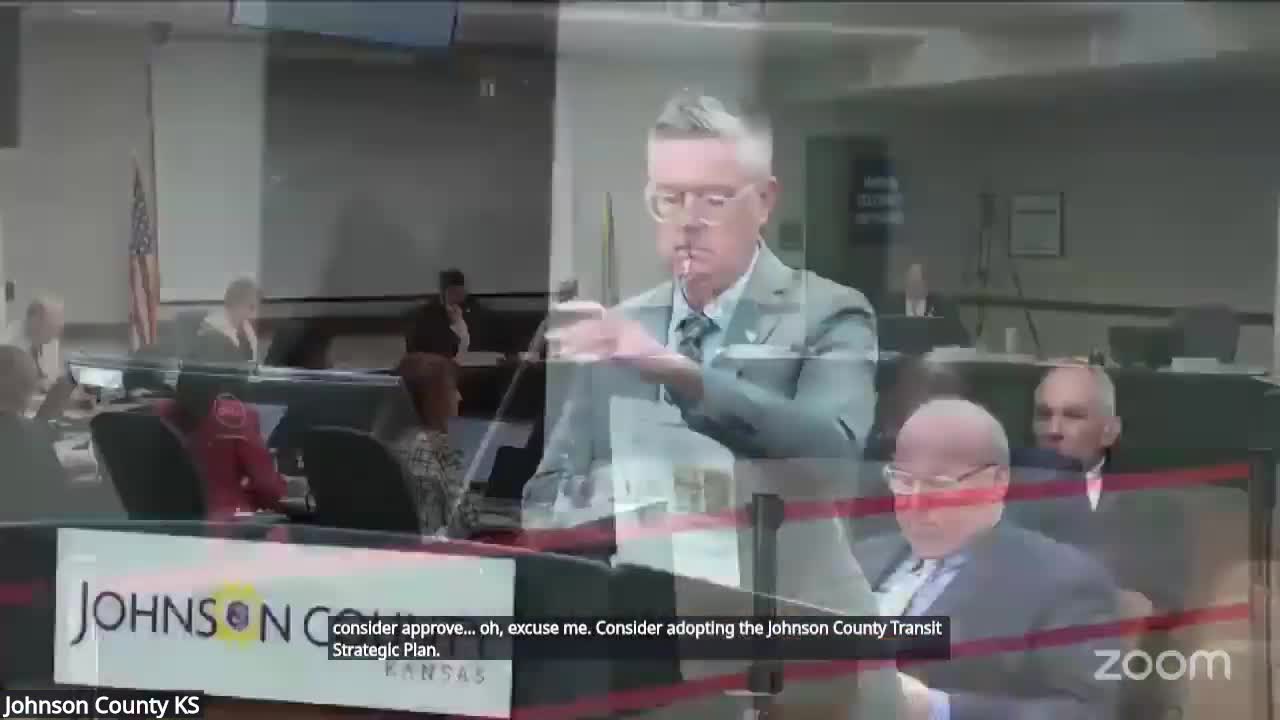
Summary
Johnson County presented a strategic transit plan proposing a 'foundational' system that raises frequency on core corridors, standardizes hourly local routes, reduces microtransit coverage inside the 435 loop, and calls for a phased rebrand and return-to-fares.
Johnson County staff presented a 64-page Johnson County Transit strategic plan on Nov. 13 that recommends a foundational service-level change focused on improving frequency on core corridors, reducing microtransit geographic coverage, and setting up tools to evaluate where future service should grow.
Josh Powers, transit director, summarized an 18-month outreach process and steering-committee work that produced a vision for a connected community using targeted, efficient transit. The plan prioritizes high-demand corridors with frequent, reliable service and proposes several key changes for the initial 'foundational' system: shrink microtransit to the area inside the 435 loop, standardize non-high-frequency fixed routes to no worse than 60-minute headways, invest in targeted frequency increases on routes such as Metcalf (401), 75th Street (475), and Strangeline (520), and pursue one or more express connections to KCATA’s East Village Transit Center.
Powers explained the operational trade-off between geographic coverage and frequency and said prior microtransit growth cannibalized fixed-route ridership when fixed-route frequencies were low. The plan acknowledges that activating ADA-complementary paratransit (a federal requirement once fixed-route frequency crosses a threshold) may expand the demand for paratransit and that staff will aim to preserve non-ADA paratransit access where feasible.
The plan also recommends organizational changes including a rebrand (examples shown, e.g., 'Ride Joco' / 'Joco'), a return to fares with means-tested reduced fares, and a service-development guideline to evaluate requests for service expansion (including potential city or developer contributions).
Board members asked detailed questions about route frequencies, weekend service, funding and partnerships, and the effect on riders who would lose weekend microtransit service. Staff said microtransit ridership is far lower than during pandemic-era peaks (about 50 trips per day now vs. up to 1,000/day during ARPA-funded peak) and that the initial package relies on existing budgeted funds without adding new resources. The plan will be returned for formal approval next week with a fuller implementation timeline and budget impact discussion.