Get Full Government Meeting Transcripts, Videos, & Alerts Forever!
Get email alerts on the Rezoning topic
No spam. Unsubscribe anytime.
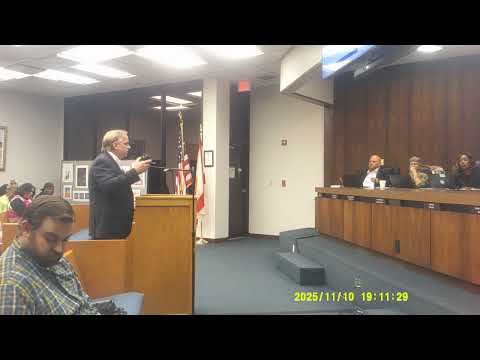
Live Oak council hearing: neighbors, a councilmember and staff clash over small, flood-prone lot, enforcement notices and a declined CRA grant
Summary
Residents and a councilmember raised objections to rezoning a 50-foot-wide, partially flooded parcel, questioned why code enforcement posted four notices on a local business, and sought explanation for a Community Redevelopment Agency (CRA) grant that staff says the recipient declined.
A public hearing in the City of Live Oak centered on a proposed rezoning for a narrow, flood-prone parcel and a related dispute over code-enforcement notices and a Community Redevelopment Agency grant.
Carolyn Wolsey, a resident who spoke during public comment, said the property is "only 50 feet wide" and that "half of the property" is underwater at times, arguing the lot could not meet the city's own lot-width guidance for multiunit housing. "I've read in your paperwork here that they would need at least 80 feet to do a duplex and at least a 100 feet to do a triplex," Wolsey said, urging the council to consider flood impacts on neighboring properties.
A councilmember complained that planning and zoning staff and the city attorney had not communicated directly with her about the matter and said staff appeared to be stonewalling elected officials. The councilmember also criticized code enforcement for placing four separate notices on the business property—on the back door, front door and windows—calling that number "overkill" and asking why multiple placards were used.
George Curtis, the city's development manager, responded that there was "no vendetta" and that staff sometimes posts multiple notices "because of the kind of immediate health and safety nature" of a violation. "I got nothing personal," Curtis said. He said multiple notices have been used previously and apologized if the approach seemed heavy-handed, adding that staff's intention is to help applicants navigate rules.
Staff explained the dispute had escalated to the level of the city attorney after the attorney issued a legal opinion, limiting what staff could discuss without the attorney or the city manager present. That procedural escalation, staff said, was why some follow-up appeared to be handled by the attorney's office rather than staffers on the planning desk.
The meeting also addressed a Community Redevelopment Agency grant the council had approved. Staff told the council that on Oct. 14 the business owner, identified in staff notes as Miss Brown, signed a statement "I decline the CRA grant," and that staff had documentation of that decision. The councilmember disputed that sequence, saying the board had approved grants and that a check was never mailed; staff maintained the recipient formally declined the grant.
The meeting moved to the public-comment period after the exchange.
The council did not take further formal action on rezoning or enforcement during the remarks recorded in the transcript; staff indicated the matter had legal involvement and would proceed with attorney-level coordination as appropriate.