Get Full Government Meeting Transcripts, Videos, & Alerts Forever!
Get email alerts on the Zoning Nonconforming topic
No spam. Unsubscribe anytime.
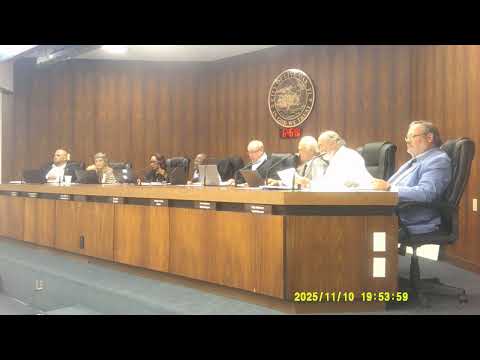
Live Oak council discusses zoning, grandfathering and special exceptions for neighborhood corner business
Summary
Council members and staff discussed whether a long-standing corner business qualifies as a nonconforming use under the city's 1985 'commercial neighborhood' zoning, and whether off-premise alcohol sales require a special exception; owner Darryl Bridges presented alleged historic paperwork.
City of Live Oak staff and council members discussed the zoning classification and legal status of a neighborhood corner business owned by Darryl Bridges, focusing on whether that use is a nonconforming (grandfathered) use under the city's 1985 zoning map and whether certain permits — such as for off-premise alcohol sales — would require a special exception.
City staff explained to the council that the city does not have a "commercial residential" zoning category and that the term in local practice corresponds to a "commercial neighborhood" designation adopted in 1985 as part of the city's comprehensive plan. A staff member summarized the city's approach to nonconforming uses: if an existing use predates a zoning change it may continue; however, if the use ceases for six months the later occupant must comply with the current rules. The staff member also stated that off-premise alcohol sales in a commercial neighborhood require a special exception under the code.
Property owner Darryl Bridges contested the need for a special exception for his property and said he had documentary evidence he found in an attic indicating a prior license: "Mister Hall did have a license, and Mister Hall license was 27 back in 1965," he said on the record. City staff and the attorney clarified that historical documentation can be relevant to establishing a continuous, lawful use but emphasized that confirmation and formal review would be required; staff said they had not yet reviewed all materials and could not on the spot conclude the legal status.
No formal action (motion or vote) was recorded on the zoning status during the meeting; the discussion closed with staff and council noting that the matter requires follow-up review of records and code compliance.