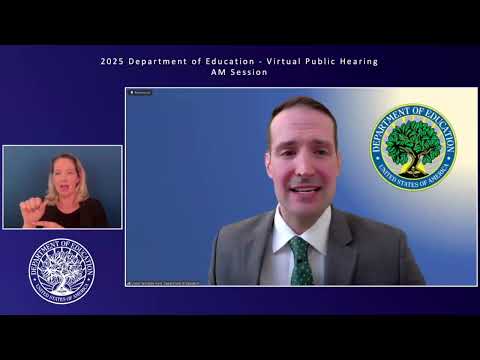
Education Department opens hearings to implement '1 Big Beautiful Bill,' stakeholders press for guardrails and clarity
Loading...
Summary
The U.S. Department of Education convened a virtual public hearing to begin implementing the recently enacted 1 Big Beautiful Bill Act, with witnesses urging clear rules on accountability, borrower protections, workforce Pell eligibility and data systems ahead of negotiated rulemaking.
The U.S. Department of Education held a virtual public hearing to collect stakeholder input on implementing the recently enacted 1 Big Beautiful Bill Act, a sweeping package of higher‑education changes that officials said must be translated quickly into regulations.
Undersecretary Nicholas Kent, sworn in on Aug. 4, 2025, told attendees the department is moving to establish negotiated rulemaking committees this fall to write draft Title IV regulations and invited written comments through Aug. 28 via Regulations.gov. Kent said the federal student loan portfolio totals roughly $1.6 trillion and stressed that the department’s work must restore public confidence in higher education.
Why it matters: The negotiated rulemaking will determine operational details that affect millions of borrowers and thousands of institutions — from new repayment plan mechanics to program‑level accountability measures and which short‑term training programs can receive Pell Grant funds.
Many witnesses agreed on the broad goals: better alignment of federal aid with workforce needs, clearer program‑level data, and protections against low‑value programs. But they diverged sharply on how to achieve those aims. Advocates and legal‑aid groups pressed the department to preserve or restore elements of the 2023 SAVE and financial‑protections rules (including automatic enrollment and credit for qualifying payments), and asked for protections for borrowers in default. Institutional representatives asked for clear, methodologically sound data definitions and accommodations for small or mission‑driven programs. Trade groups and employers urged the department to design rules that support apprenticeships and recognize certain undergraduate flight training as professional programs so students may access higher loan limits.
Quotes from the hearing illustrated the split. Kent said the department would "restore common sense and integrity to the federal student aid system," while advocates warned proposed statutory changes to loan limits and repayment plans could "push millions of Americans below the poverty line" if implemented without borrower safeguards (testimony summarized from multiple witnesses).
What the department asked for: Witnesses were asked to comment on processes to implement the law, how to align federal student aid with workforce needs, and how to ensure accountability across program types. Several speakers urged the department to prioritize clear definitions (for example, of "professional student"), methodology for earnings‑based accountability, and robust state and institutional data systems to support program eligibility decisions.
Next steps: The department will use input from the hearing and written comments submitted by Aug. 28 to populate negotiated rulemaking committees. Those committees will draft proposed regulations later this year for public notice and comment. No final regulatory decisions were made at the hearing.