
Local workforce boards urge central role in workforce Pell implementation
Get AI-powered insights, summaries, and transcripts
Sign Up Free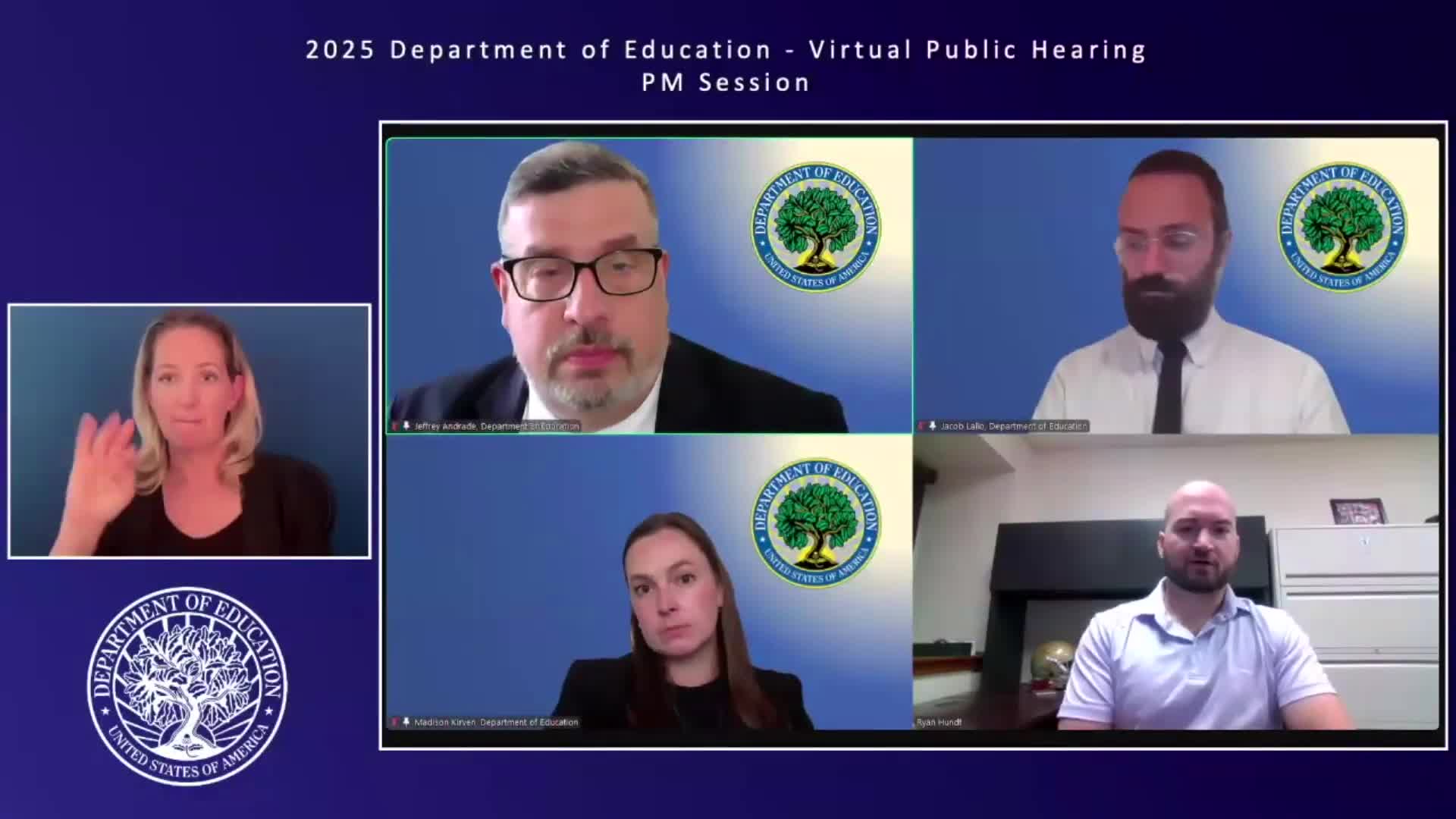
Summary
Workforce development leaders told the Education Department that local workforce boards and America Job Centers should help approve and oversee short‑term workforce Pell programs to ensure training responds to local employer demand and that wraparound supports enable completion.
Local workforce leaders told the Department of Education that alignment with existing workforce systems is essential for workforce Pell to deliver on its goals.
Ryan Hunt, CEO of the Michigan Works Association, said local workforce boards have “unmatched knowledge of our regional labor markets” and should help identify and validate short‑term programs (testimony cited an 8–15 week range) that align with hiring needs. He argued that boards’ experience with outcome review, wage gains and placement under WIOA makes them well‑suited to apply similar benchmarks for workforce Pell.
Andrew McGough of WorkSystems described a beneficiary case to show how WIOA services, America Job Center wraparound supports and short‑term credentials can lead to employment. “This is what it looks like when systems align,” McGough said, describing coordinated services from FAFSA assistance through job placement.
Other witnesses — including Dennis Wilke of Rosedale Technical College — urged the department to include incumbent‑worker career‑advancement training among eligible workforce Pell programs, not only new‑worker pathways.
Why this matters: Workforce Pell aims to expand short‑term training tied to employer demand. Witnesses said that embedding local workforce boards in eligibility, approval and outreach processes will maximize employment outcomes and avoid duplication.
What happens next: Stakeholders said they will submit written comments with specific eligibility and reporting recommendations as the department moves into negotiated rulemaking.