
Civil‑rights groups press Education Department for dedicated negotiator seat
Get AI-powered insights, summaries, and transcripts
Subscribe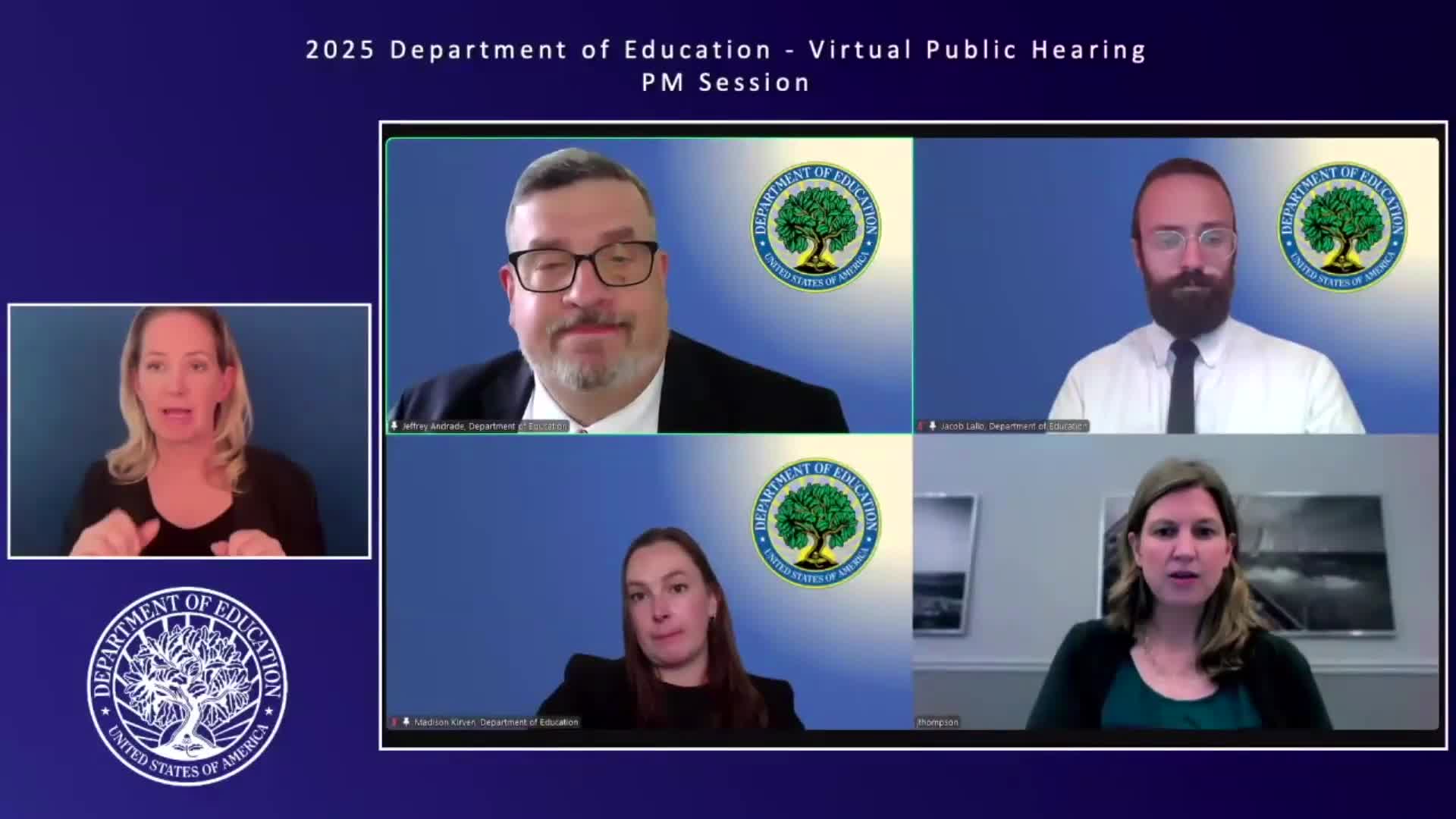
Summary
Civil‑rights and student‑advocacy witnesses at a Department of Education listening session urged a separate negotiator seat for civil‑rights organizations, warned that staff cuts and rushed timelines risk poor implementation of the new law, and demanded guardrails for workforce Pell and borrower protections.
Jessica Thompson, senior vice president at the Institute for College Access & Success (TICAS), urged the U.S. Department of Education to create a distinct civil‑rights negotiator seat for upcoming negotiated rulemaking sessions. “We urge the department to create and allow a separate seat for negotiators representing civil rights groups at both tables,” Thompson said, arguing that a dedicated representative would better surface how regulations affect students and the department’s compliance with civil‑rights law.
Other witnesses echoed that request. Maheen Sanchez of UnidosUS said collapsing civil‑rights representation into other constituencies “undercuts the legitimacy” of the rulemaking and called for longer negotiating timelines and restored staff capacity. Dr. Kyle Southern of the Partnership for College Completion and Tanya Valencia of the Leadership Conference on Civil and Human Rights similarly argued for distinct seats for civil‑rights advocates and for financial‑aid practitioners so impacted students and implementers have direct voices at the table.
Witnesses framed the demand as part of a broader concern about implementation capacity. Several speakers said recent federal budget changes and internal staffing reductions could force the department to issue waivers or otherwise implement program changes without adequate verification of compliance, particularly for the pilot‑training and workforce Pell programs. “Eliminating voices of students of color and other unrepresented students by collapsing the seat to the civil rights community…under cuts the legitimacy of these proposed regulations,” Sanchez said.
Why this matters: negotiated rulemaking allows stakeholders to help shape how Congress’s policy choices are implemented. Witnesses said that without dedicated civil‑rights and practitioner representation, technical drafting choices could unintentionally disadvantage historically underrepresented students.
What happens next: the department invited written comments through Regulations.gov and said it will proceed with negotiated rulemaking and additional listening sessions; stakeholders will have an opportunity to press for explicit seats in the negotiator selection process.