Leaders, museum mark 70th anniversary of Moton student walkout; committee hears history
Loading...
Summary
The Senate Brown v. Board Scholarship Committee heard a virtual presentation from the Robert Russa Moton Museum on the 70th anniversary of the 1951 Moton student walkout, detailing overcrowding, student activism led by Barbara Johns, and the legal path to Brown v. Board of Education.
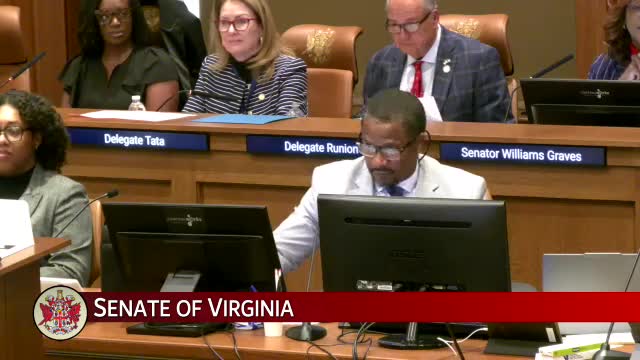
Sen. Angela Williams Graves, chair of the Senate Brown v. Board of Education Scholarship Committee, opened the Nov. 14 committee meeting with remarks and introduced a virtual presentation from the Robert Russa Moton Museum on the 70th anniversary of the Moton student walkout. Leah Brown, a museum representative, led the presentation.
Brown said the Moton museum building was purchased for $300,000 by a local group led by the Martha Forester Council and opened as a museum in 2001; it later was designated a National Historic Landmark and added permanent galleries in 2013. The presentation emphasized the “power of place,” showing how the original classrooms and floors remain as they did for Moton students.
The museum representative described crowded and unsafe conditions at Moton High School in the late 1940s and early 1950s: classrooms were overcrowded, some students attended classes in makeshift tar‑paper shacks and multiuse spaces, and the school lacked adequate heating and facilities compared with the nearby white Farmville High. “I just thought this is your moment. Seize it,” Brown quoted Barbara Johns describing why the students acted.
Brown traced the student walkout of April 23, 1951, and local organizing that followed: students mobilized to protest facilities and teachers were deliberately kept off campus to preserve the student‑led nature of the action. The museum representative said Barbara Johns contacted NAACP lawyers in Richmond; the local case (Davis v. Prince Edward County) was combined with other cases that became Brown v. Board of Education.
The presentation covered subsequent local responses, including “massive resistance” in Virginia, the 1959 closure of Prince Edward County public schools, the emergence of private alternatives such as Prince Edward Academy, the creation of free schools, and the county schools’ reopening after Griffin v. Prince Edward County. Brown noted long‑term community impacts, including population and economic changes in Farmville.
Committee members thanked the presenter and said the history provided helpful context for the committee’s scholarship work. The committee discussed commemorating the anniversaries with a joint House/Senate resolution and asked staff to assist with drafting.
The committee scheduled further action on scholarship language at a Dec. 3 meeting and adjourned after public comment and committee business.