Get Full Government Meeting Transcripts, Videos, & Alerts Forever!
Get email alerts on the Zoning Density topic
No spam. Unsubscribe anytime.
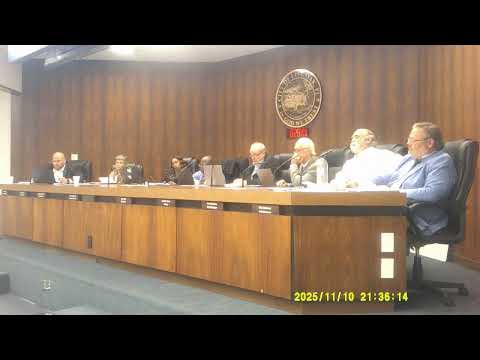
Live Oak commission denies first‑reading request to increase density on lot with flood‑prone portion
Summary
The City of Live Oak commission voted to deny, on a 3‑1 voice vote, a first‑reading request tied to ordinance 15‑47 to increase residential density on a parcel that contains a mapped floodplain portion.
The City of Live Oak commission voted to deny, on a 3‑1 voice vote, a first‑reading request tied to ordinance 15‑47 to change the land‑use/zoning standard for a contested parcel, after residents raised concerns about flood risk and potential changes to neighborhood character.
At the meeting, staff explained the lot is split by elevation: the northern portion lies in the city’s mapped floodplain while the southern portion sits at higher elevation and is buildable. Staff said the current designations restrict construction in the floodplain and that elevated homes may be possible on higher ground but at added cost. "You can put an elevated home on the property," staff said, noting the practical and cost constraints.
Neighbors and an adjacent property owner urged caution. Resident Chris Wolsey told the commission he and neighbors "have no intention" of opposing single‑family development but warned that a land‑use change would give a future owner latitude to build duplexes or other multifamily forms that could alter the neighborhood. One resident moved to deny the ordinance because of flood concerns; council discussion focused on whether the statements presented constituted "competent, substantial evidence" under the code or were opinion. Staff and counsel repeatedly noted that, under local code, denial should be supported by evidence tied to the statutory criteria rather than by unspecific concerns.
An applicant representative described prior work remediating blighted properties and said his group would build what the city allows. "We spent more on clearing the lot than we did on actually purchasing a lot," the representative said, adding the intention to follow the city's rules. Planning staff noted the applicable categories: the request would have changed residential moderate (about 4 units per acre) to residential medium (about 8 units per acre) and pointed to the code's 16‑point criteria that land‑use changes must satisfy.
Procedurally, a first reading motion to advance ordinance 15‑47 was made by Mr. Fletcher but initially failed to receive a second. Later, a motion to deny was made and the commission recorded a 3‑1 voice result to carry the denial. Counsel and staff said additional, competent evidence (for example, a technical floodability analysis tied to the proposed uses) could be submitted before any subsequent formal hearing if the applicant chose to refile or seek reconsideration.
The denial ends the first‑reading action on ordinance 15‑47 in this session; the record shows concerns about flood risk and the evidentiary standard were central to the outcome.