
UNRWA chief urges accountability, cites ICJ opinion and warns of access constraints
Get AI-powered insights, summaries, and transcripts
Subscribe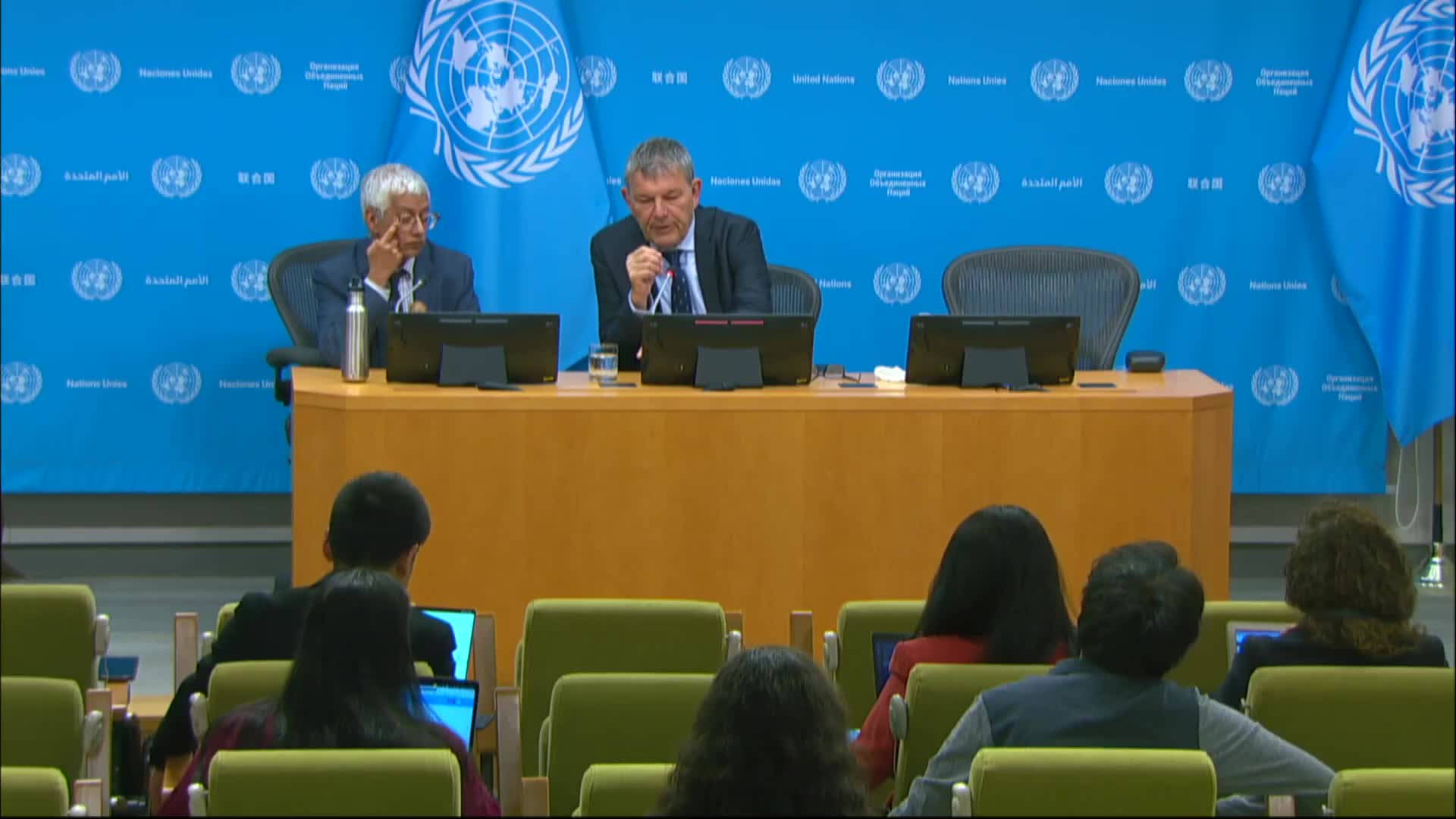
Summary
Philippe Lazzarini urged mechanisms of accountability, suggested a board of inquiry as a starting point, cited the International Court of Justice advisory opinion as a legal reference for member states, and said Knesset measures and visa restrictions have constrained UNRWA's international staff while local staff continue providing services.
Philippe Lazzarini told reporters that accountability for damage to UN premises and the safety of staff is necessary and that one possible start is an administrative board of inquiry to establish facts.
"We need accountability," Lazzarini said, describing destroyed premises, attacks on staff and the use of some premises for military purposes during the past two years. He suggested a board of inquiry could be a first administrative instrument for fact‑finding and that broader justice and recognition of atrocities will be needed for lasting peace.
Lazzarini cited an advisory opinion from the International Court of Justice and said although advisory opinions are nonbinding, they can serve as a legal reference member states may use to press for compliance and fuller UN access. He said he did not expect immediate compliance by Israel but that the opinion could strengthen the position of states urging access.
On access, Lazzarini said two Knesset bills have affected UNRWA's work — particularly in East Jerusalem — and have hampered official relations that in turn disrupted visa processing for international staff. He said those bills do not legally prevent local UNRWA staff in the West Bank and Gaza from operating schools and health centers, but the legislation and other restrictions have limited the return of international personnel.
Lazzarini identified the operational coordination body known as the CMCC and crossings such as Rafah as potential mechanisms to restore access for supplies and staff, but he warned that preserving UNRWA's "operational space" will be essential for recovery and stabilization.
He also disputed claims made by another representative that UNRWA has been "fully replaced," saying the agency retains community trust and unique operational capacity on the ground.