EEC details CCFA gains and limits: more providers accepting subsidies, but voucher access remains constrained
Loading...
Summary
EEC officials reported the Child Care Financial Assistance (CCFA) system now serves more children than ever and 69% of providers accept CCFA, but income‑eligible vouchers remain limited by appropriations; DCF and DTA referrals retain guaranteed access. Staff highlighted policy changes, rate increases and a family portal as next steps.
Department of Early Education and Care officials on Nov. 1 gave the board an in‑depth update on Child Care Financial Assistance (CCFA), showing growth in participating providers and children served but persistent limits on voucher access for income‑eligible families because of appropriation constraints.
Deputy Commissioner for Family Access Tyrese Nicholas explained the state uses a “state‑first” funding model: the Commonwealth pays costs during the year and later claims federal CCDBG (Child Care and Development Block Grant) reimbursement. About half of EEC’s budget is federal; state appropriations provide stability and allow the department to continue payments during federal funding disruptions.
Tyrese and Eric Hansen (CFO) described three CCFA programs—income eligible (wait‑list based and currently limited by funding), DTA‑related and DCF‑related (both referred and guaranteed immediate access)—and two assistance forms: vouchers (portable) and contracted seats (fixed). Eric said reprocurement updated contracts for the first time in 15 years and raised per‑seat payments: contracted seats now account for a significant share of spending ($416 million cited for contracts in presentation).
Presenters said 69% of providers now accept CCFA, up materially in two years; that growth has produced more access and options for families while increasing overall costs. Eric reported that average spending per enrolled child is roughly $15,000 annually (an average that varies by infant, toddler, preschool and school‑age rates), and that increases in reimbursement rates since FY19 total approximately $250 million in appropriations.
Staff addressed the income‑eligible wait list: the list remains open, but access (availability of vouchers) is limited by the income‑eligible appropriation. The FY25 budget included a statutory change to raise initial eligibility from 50% to 85% of state median income effective January; staff said that change could increase applicants and they are preparing the family portal and communication plans to reduce confusion in communities where people hear the program is “closed.”
Researchers and data staff showed regional and age‑band differences (Northeast region ~1/3 of the wait list and demand rising with child age because school‑age slots and summer care draw higher numbers). Staff also explained seasonality—summer months increase full‑day placements and associated costs—and flagged policy changes that raise per‑child cost (waiving certain family fees for homeless families, not counting SSI/child support, expanded transportation in contracts).
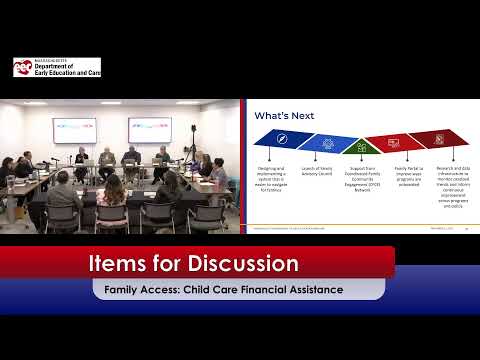
Next steps include launching the family portal to provide transaction‑level status updates and clearer eligibility information, establishing a family advisory council, ongoing reprocurement and rate‑setting work, and continued KPI dashboard improvements so staff and the board can better measure access and fiscal implications.
Board members praised the data work and stressed the importance of clearer external messaging so families know how to seek assistance and when contracted seats may become available. Officials said staff will continue coordinating with DTA and DCF and refining caseload management to maximize reach within appropriation constraints.