
EEC board authorizes publication of updated residential licensing regulations for public comment
Get AI-powered insights, summaries, and transcripts
Subscribe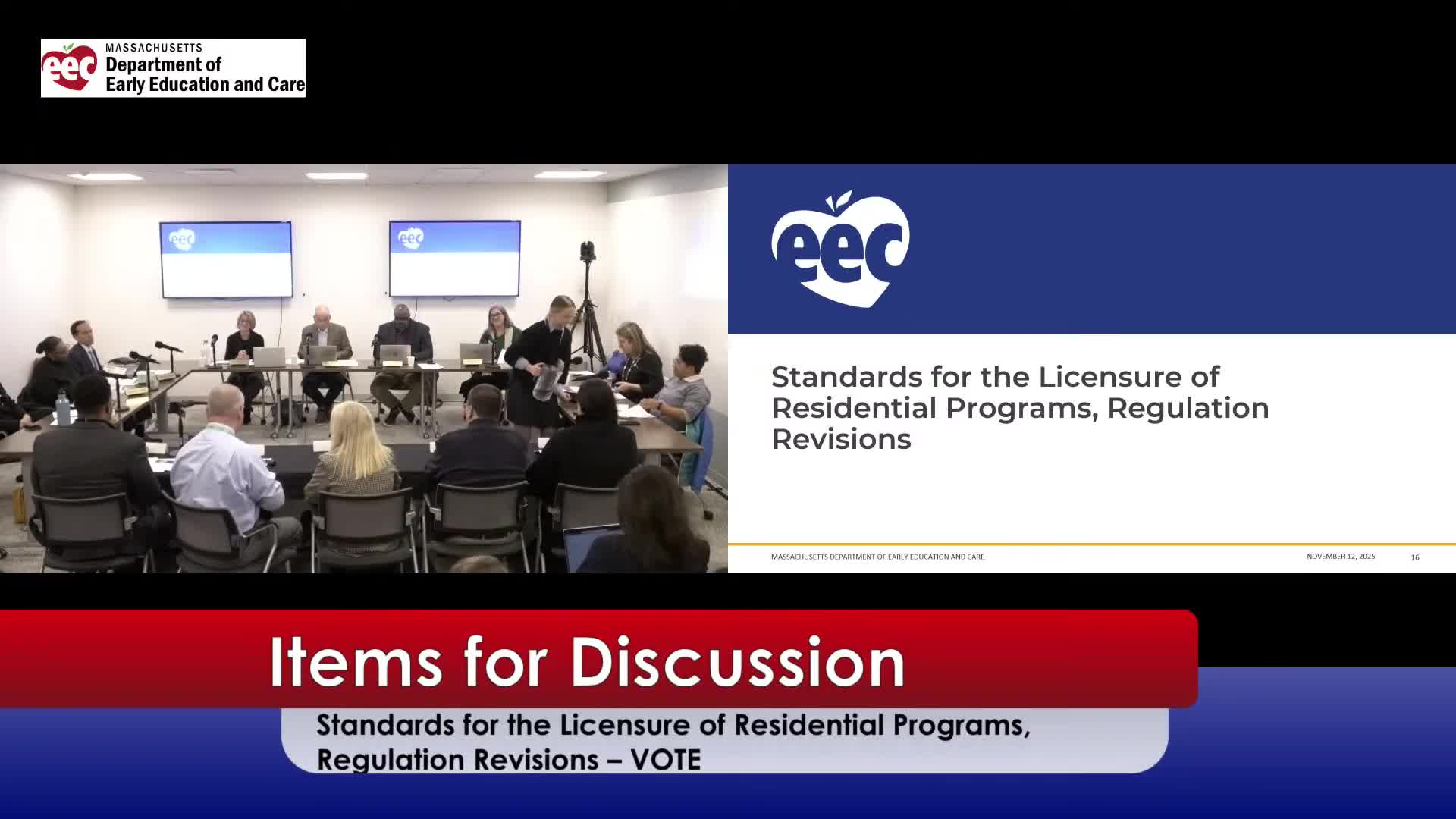
Summary
The Board of Early Education and Care voted to file revised residential and group-care licensing regulations for public comment, the first comprehensive update in decades; changes include inclusive language, trauma‑informed care, transparency measures and new reporting requirements. The filing was authorized with one abstention.
The Board of Early Education and Care voted on Nov. 1 to authorize the commissioner to file amended regulations governing residential and group-care programs with the Secretary of the Commonwealth for publication and public comment, advancing the first comprehensive regulatory revision in roughly 30 years.
Presenters said the revisions modernize language (moving to gender‑neutral and more inclusive terminology and replacing “resident” with “child”), align seclusion rules with recent DESE changes, and require strengthened permanence‑focused, trauma‑informed practices and training for staff. The proposed rules would also increase program transparency and accountability: background-record-check language is clarified, programs must include board representation with direct experience of the populations they serve, and programs must submit annual reports with specified data (for example, restraint incidents) and camera policies for EEC review.
Joe Rucker, Deputy Commissioner for Field Operations, told the board the changes are intended to reduce duplication across agencies and create clearer, enforceable expectations: "Strong regulation must not only be clear, but enforceable, ensuring accountability across programs." Tim Keane, director of residential placement services, said the working group of providers and state partners both pulled back proposals where the field was not ready and pushed staff to strengthen other provisions.
Board members asked how the agency engaged youth and families in the revisions. Tim Keane said licensor interviews and work with the Office of the Child Advocate had provided direct input from youth and program participants, and staff invited families and youth to participate in the public comment process and hearings. The team outlined planned public‑comment outreach—virtual and in‑person hearings and an online comment portal—and a schedule that looks for comment review Jan–Apr and a final board vote in April.
Chair moved the motion to authorize filing; the motion was seconded and approved. One abstention was recorded. Staff said they will publish guidance on how families, youth and providers can participate in the comment period and will return in April for a final vote after public comments are reviewed.