Get Full Government Meeting Transcripts, Videos, & Alerts Forever!
Get email alerts on the Property Maintenance topic
No spam. Unsubscribe anytime.
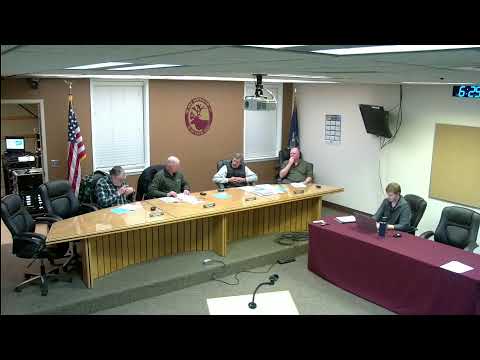
Caribou planning board weighs Bangor model for vacant‑building registry amid staffing and liability concerns
Summary
Planning staff asked the board to consider elements of Bangor’s property‑maintenance and vacant‑building ordinance, including a registry and registration fee; members praised possible safety and rehab benefits but raised staffing, enforcement and liability concerns and asked staff to gather more information from comparable towns.
The Caribou Planning Board on Tuesday reviewed a proposal to adapt elements of the City of Bangor’s property‑maintenance ordinance to address abandoned and vacant buildings.
Planning staff said the Bangor model includes a registry, permitting process and proactive measures that can make it easier for developers to rehabilitate blighted properties. "By instituting policy on abandoned, vacant buildings, it's cut down on a lot of the break ins," said a board member advocating the idea.
Board members stressed the potential for public‑safety benefits and reuse but flagged practical limits. One member warned the city must be willing "to put the money up front to pay for the city attorney to to actually go to the court and have the judge rule on these things," noting enforcement often requires legal action. Staff also noted Bangor’s code‑enforcement office staffs 11 or 12 people, a capacity Caribou does not have.
The board debated registration mechanics and compliance. A board member proposed a nominal registration fee — "if we were to charge a nominal fee, let's say, dollars 35 to register your your house, those monies would be used to pay for the property maintenance," staff said the packet suggested. Members questioned whether that would drive high noncompliance and observed that collecting fees and paying upfront for contractor work can be difficult for a small municipality.
Several members recommended gathering local data and outside experience before drafting ordinance language. Staff offered to prepare a memo on enforcement, liability and staffing options, and to invite representatives from Bangor and Presque Isle to share lessons learned. The board agreed to keep the proposal on future agendas for further work.
Next steps: staff will compile examples, cost and enforcement summaries and return with a draft or memo for the board to consider at an upcoming meeting.