Council accepts Equal Rights Commission advisory report after marathon public hearing on short‑term rental rules
Loading...
Summary
After more than three hours of public comment, the Common Council accepted an ERC advisory report on short‑term rental regulation and referred a staff‑draft ordinance to the Plan Commission with amendments including staff direction on enforcement, neighbor contact requirements and consideration of a 3‑strike nuisance process.
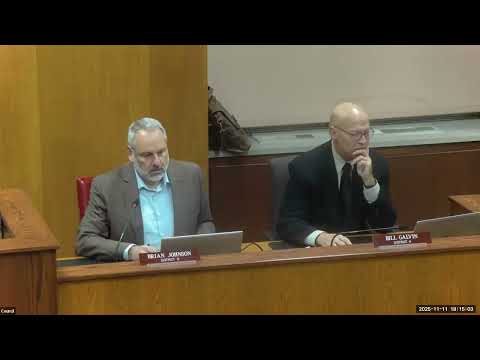
The Green Bay Common Council on Tuesday accepted the Equal Rights Commission’s advisory report on short‑term-rental (STR) regulation and referred a staff draft of an ordinance to the Plan Commission after an extended public hearing that drew dozens of operators, neighbors and housing advocates.
The council opened a packed floor for ERC testimony and public comment on an advisory report recommending limits such as a 7‑night minimum stay and a 180‑day annual cap on unoccupied short‑term rentals. More than 40 residents and operators spoke. STR owners and managers warned caps would eliminate small operators, reduce local jobs and cut revenue for cleaners, landscapers and other suppliers. “We operate one STR…we have provided a home to grieving families,” said homeowner Steve Carls, who told the council his licensed property hosts families and essential guests and estimated his rental nights at 60–90 per year.
Housing advocates and ERC commissioners pressed the opposite case. ERC commissioner John Shelton cited the city’s housing study and the commission’s data showing a rapid increase in STR permits; he said Green Bay needs thousands of new units over coming decades and should use regulatory tools to limit STR growth and protect housing supply. State Representative Vera Wagner told the council the 2017 state law limits municipal authority on STRs and said she intends to introduce legislation to return local control to municipalities.
The council accepted the ERC report (recorded as 10–2) but also amended and referred the matter to staff for ordinance drafting. Council amendments added direction for staff to draft policy language addressing: required local contact information for neighbors, progressive nuisance enforcement options (three‑strike frameworks with graduated sanctions), and other operational enforcement measures. Staff told the council it will analyze statutory constraints, likely draft ordinance language for Plan Commission review on Nov. 17, and return with recommendations.
What the council did not do Tuesday was adopt the proposed night‑minimum or annual cap as ordinance language. Several council members said they wanted staff to produce a draft ordinance the council and the Plan Commission could discuss publicly and to preserve options for grandfathering or exceptions. The council’s referral includes specific drafting instructions and an expectation of further public hearings.
Next steps: Staff will draft ordinance language in consultation with legal counsel and the Plan Commission; the city has scheduled Plan Commission consideration and public hearings on Nov. 17; council members said any final regulatory changes would return to council for votes after additional hearings.