Get Full Government Meeting Transcripts, Videos, & Alerts Forever!
Get email alerts on the Special Exception topic
No spam. Unsubscribe anytime.
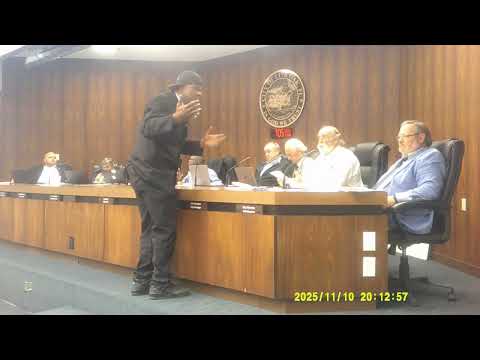
Owner and City staff clash over need for special exception to sell alcohol in Live Oak
Summary
At a City of Live Oak meeting, a property owner argued past use allowed alcohol sales; city staff said there is no record of a prior liquor license and advised the owner to apply for a special exception under the city—s Land Development Regulations before the city can approve required documents.
At a City of Live Oak meeting, a property owner seeking to sell alcoholic beverages at a neighborhood store clashed with city staff over whether the site is permitted to do so without a land‑use special exception.
The owner, who identified a long-running dispute over the property stretching back to 2018 and 2021, said multiple nearby businesses had "commercial residential" uses and appeared to sell alcohol before 1985. He told the meeting that "I have approved showing the defense bill set at the store since 1965," arguing that prior practice and past approvals should allow the current application to proceed.
City staff disagreed. A staff member advising the council said the property "is required to have a special exception," adding that staff had provided the owner the application and that the building department would separately determine code compliance. The staff member also said that, according to their records search, they had "not found any evidence that a liquor license was ever on that property much less in 1985 when the LDR went into effect." (LDR refers to the city—s Land Development Regulations.)
The exchange focused on two separate issues: whether the structure meets building-code requirements (inspections, surveys, certificates) and whether land‑use rules permit alcohol sales without a special exception. The staff member repeatedly distinguished those issues, saying building‑department clearance is separate from the land‑use determination about alcohol sales.
The owner pointed to other properties he said received approval for alcohol sales without a special exception, citing parcel identifiers (referred to in the meeting as "406" and "306") and asking why he alone was being required to apply. Another speaker cited the Crab Shack as an example of a business that obtained a special exception when its zoning designation changed, indicating similar special‑exception requests have been approved in the past.
City staff urged the owner to present documentary evidence if he believes records show a prior liquor license; the staff advisor said staff had supplied the special‑exception application and that the city must have a granted special exception before it can sign off on the document the owner needs for licensing. The staff advisor also referenced a city review (referred to in the transcript as "DPPR") that staff said did not find evidence of a prior liquor license; the meeting transcript does not define that acronym.
No formal motion or vote on the special exception appears in the transcript. Meeting staff directed the owner to bring supporting records to staff and to the police for review, and they said the building department would decide any separate code‑compliance issues. The owner repeatedly asked the council to review the docketed items for the related parcels; the meeting ended with staff instructions on how to present additional materials.
The dispute centers on whether the owner can claim a grandfathered right to sell alcohol based on past use and whether existing records support that claim. City staff said the record does not substantiate a prior liquor license on the site and that the proper course is to apply for a special exception under the Land Development Regulations. The next procedural step, according to staff in the meeting, is for the owner to submit documentation with the special‑exception application and for staff to review the city's records and coordinate with the building department and police.