
Council hearing spotlights Intro 12‑61 as council seeks pay relief for 24,000 paraprofessionals
Get AI-powered insights, summaries, and transcripts
Subscribe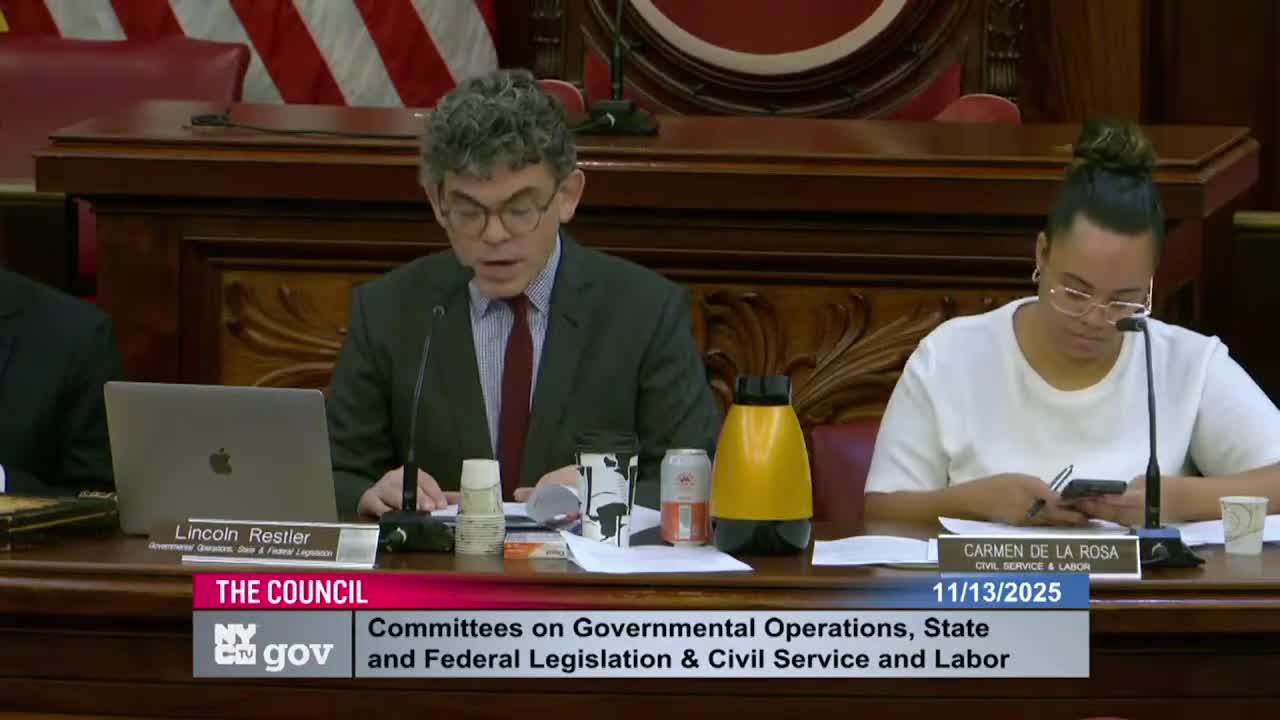
Summary
Intro 12‑61 would create an 'excess differential offset' to reduce wage gaps affecting about 24,000 paraprofessionals in the Department of Education; sponsors argued low starting pay (about $32,000) drives vacancies, while committee sought details on implementation and oversight.
Council Member Carmen de la Rosa outlined Intro 12‑61, which seeks to address long‑running pay disparities for roughly 24,000 paraprofessionals employed by the New York City Department of Education.
De la Rosa described paraprofessionals as essential to classroom functioning — providing one‑on‑one support for students with disabilities and facilitating access to services — and said that many paraprofessionals are paid so little that they must work multiple jobs. She said starting paraprofessional pay was "just about minimum wage," citing a starting figure near $32,000 and a broader salary range discussed in testimony of approximately $32,798 to $54,541.
The bill proposes an "excess differential offset," a formula‑based payment designed to reduce the wage gap between paraprofessionals and other DOE titles that have enjoyed larger percentage raises under pattern bargaining. Committee members pressed for clarity on implementation: who would calculate offsets, what oversight would be in place, and whether the proposal would preserve the city's collective bargaining framework. De la Rosa said the committee would hear from the Office of Labor Relations, the Department of Education and union stakeholders to examine those operational details.
Committee members framed the bill as both an equity and a recruitment issue: low pay contributes to high vacancy rates and disrupts student services. The hearing excerpt provided does not record a vote or detailed funding plan for the proposal; those details were requested for later testimony.