
House hearing on bill to restore legislators’ unannounced prison visits features sharp differences on oversight vs. operational control
Get AI-powered insights, summaries, and transcripts
Sign Up Free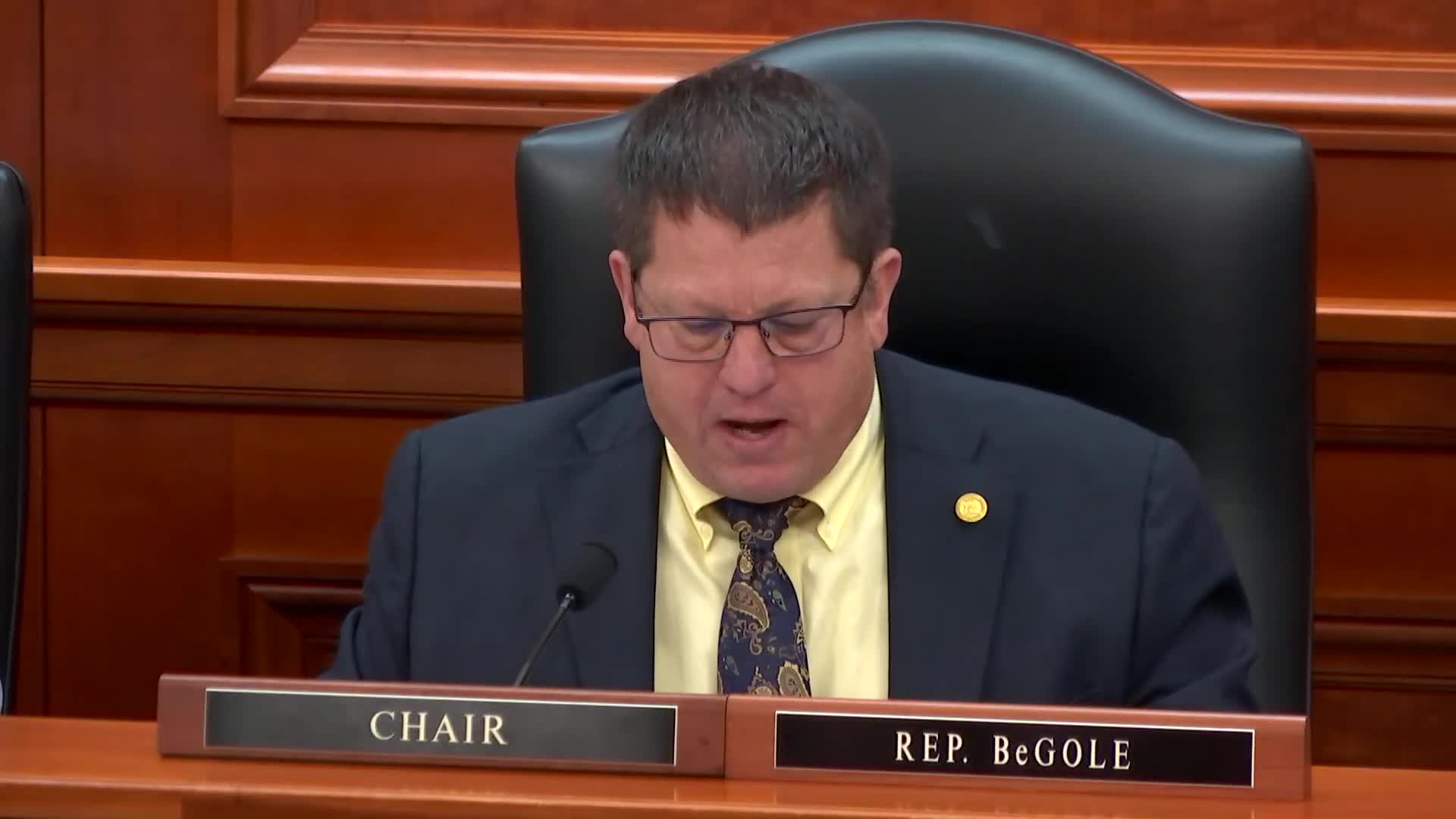
Summary
Representative Pohutsky’s House Bill 4669 would codify lawmakers’ ability to enter MDOC facilities without a 72‑hour notice requirement to strengthen legislative oversight. Supporters (advocacy groups and oversight centers) urged the change; MDOC opposed statutory codification and said policy—updated in budget negotiations—should govern visits.
The House Government Operations Committee heard testimony on House Bill 4669, which would codify a pre‑2022 practice allowing members of the Legislature to make site visits to Michigan Department of Corrections facilities without providing 72 hours’ notice.
Representative Brian Pohutsky, the bill sponsor, said the measure "merely codifies the existing and pre‑2022 practice" and argued that a statutory requirement to provide notice hampers legislators’ ability to conduct meaningful oversight. "72 hours notice can and has allowed the department to address, often superficially, issues with facilities or even to schedule appointments for inmates so that they cannot meet with their legislators," Pohutsky said, describing unannounced access as necessary to see operations as they occur.
Advocates supporting the bill said surprise visits improve transparency. Eden Kinlock of FAM, a sentencing and corrections reform organization, told the committee that "you should not create policy if you're not familiar with the people and conditions in our nation's prisons" and cited MDOC’s roughly 33,000 incarcerated people and more than 10,000 employees as reason for legislative oversight. Jim Townsend of the Carl Levin Center for Oversight and Democracy and Ben Aike, a former legislative staffer, also urged lawmakers to restore the unannounced‑visit authority, saying the power to "show up" is a powerful oversight tool.
MDOC legislative liaison Kyle Kaminski testified in opposition and urged keeping the 72‑hour rule in department policy rather than statute. Kaminski said fiscal negotiations already secured a departmental policy change to return to unannounced visits and warned that codifying access in law would remove MDOC’s authority to manage operational safety, background checks, and emergency situations. He recounted prior disruptive incidents — including a legislator arriving hours late to scheduled visits, attempts to record staff without permission, and efforts to bring non‑legislative visitors into facilities — as explanations for the department’s past reliance on a notice requirement.
Committee members probed both sides about exceptions and practical effects of group visits. Representative VanderWaal said she supports oversight but worried that wholly unannounced multi‑member visits could be disruptive and suggested a modest notice period; Representative Pohutsky replied that showing up does not guarantee an immediate tour and that facility staff retain operational control over escorts and access.
The committee did not take a final vote during the hearing. Representatives and witnesses said they would continue working on logistics and language to safeguard safety while restoring oversight authority. Sponsor Pohutsky clarified the bill applies only to legislators (not legislative staff) and that an administrative rule could not legally impose a notice requirement that conflicts with statute if the bill becomes law.
Next steps: the committee may schedule HB 4669 for further consideration after any technical revisions and continued dialogue with MDOC.